Table of Contents
-
Understanding Peptide Quality and Why It Matters
-
What Makes a High-Quality Peptide?
-
How to Test Peptides: Primary Methods Used by Professionals
-
How to Check Peptide Purity Through Laboratory Analysis
-
What to Look for in Peptides When Purchasing
-
Signs of Contaminated Peptides You Should Never Ignore
-
How to Know if Peptides Are Contaminated: Testing Protocols
-
Understanding Certificate of Analysis (COA) Reports
-
Third-Party Testing: Why Independent Verification Matters
-
Storage and Handling Impact on Peptide Quality
-
How to Verify Peptide Authenticity Before Use
-
Red Flags That Indicate Poor Quality Peptides
-
Final Thoughts on Ensuring Peptide Quality
Understanding Peptide Quality and Why It Matters
Why Peptide Quality Testing Is Essential for Research and Health
Checking peptide quality has become increasingly critical as the peptide market expands. Whether you're a researcher, healthcare professional, or informed consumer, understanding how to verify peptide integrity protects both your investment and your health. Poor quality peptides can compromise research results, waste resources, and potentially pose health risks.
The Current State of Peptide Manufacturing Standards
The peptide industry faces challenges with inconsistent manufacturing standards. Not all suppliers follow good manufacturing practices, which means peptide purity can vary dramatically between sources. This variation makes independent testing essential rather than optional. Understanding quality verification methods empowers you to make informed decisions about peptide sourcing.
Beyond Visual Inspection: Professional Peptide Quality Verification
Quality verification goes beyond simple visual inspection. Authentic peptide testing requires sophisticated analytical techniques that measure purity, identify contaminants, and confirm molecular structure. These processes ensure you receive exactly what you ordered, not a degraded or mislabeled product.
What Makes a High-Quality Peptide?
Peptide Purity Standards and Percentage Requirements
High-quality peptides meet specific benchmarks that separate pharmaceutical-grade products from inferior alternatives. Purity typically exceeds 98 percent for research-grade peptides, though minimum acceptable standards generally sit at 95 percent. This purity percentage directly correlates with peptide effectiveness and safety profiles. Understanding how to identify high-quality peptides starts with knowing these industry standards.
Molecular Integrity and Amino Acid Sequence Accuracy
Molecular integrity represents another critical quality marker. The amino acid sequence must match the intended structure exactly, with proper folding and no unwanted modifications. Even minor deviations from the correct sequence can render a peptide ineffective or create unexpected biological responses. This is why peptide sequence verification remains a crucial step in quality assessment.
Storage Stability and Manufacturing Quality Indicators
Storage stability indicates quality manufacturing processes. Premium peptides maintain their structure under proper storage conditions without rapid degradation. This stability stems from careful synthesis techniques and appropriate formulation methods. Quality peptides also arrive with comprehensive documentation including batch numbers, synthesis dates, and detailed purity reports that demonstrate proper manufacturing oversight.
How to Test Peptides: Primary Methods Used by Professionals
HPLC Testing: The Gold Standard for Peptide Purity Analysis
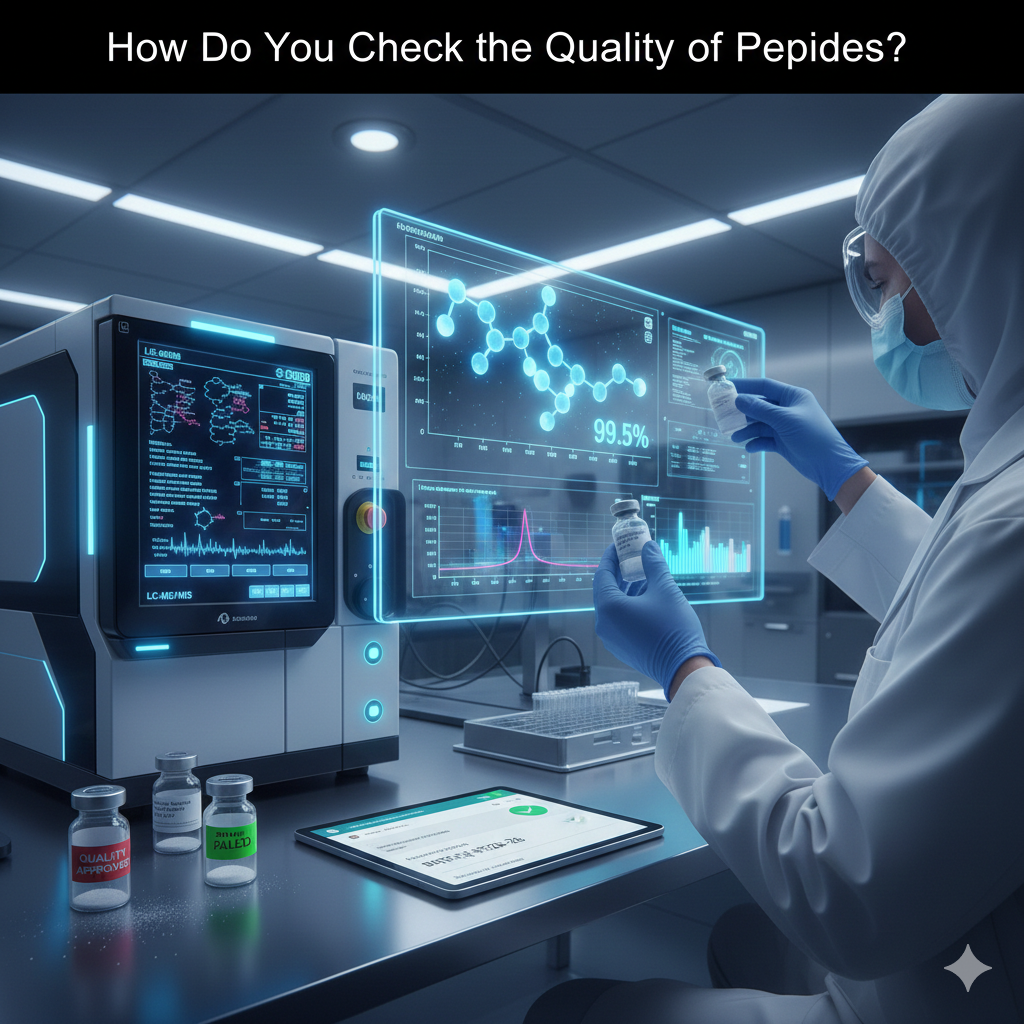
Professional peptide testing employs multiple analytical techniques, each revealing different aspects of peptide quality. High-performance liquid chromatography (HPLC) serves as the gold standard for purity assessment. This method separates peptide molecules from impurities and measures the percentage of target peptide versus contaminants. When people ask how are peptides tested in laboratories, HPLC consistently appears as the primary answer.
Mass Spectrometry for Molecular Weight Confirmation
Mass spectrometry provides molecular weight confirmation that verifies correct peptide identity. This technique detects even slight variations in molecular mass, catching synthesis errors or degradation products. When combined with HPLC, mass spectrometry offers comprehensive quality verification that few impurities can escape. This dual approach answers the critical question of how to verify peptide authenticity.
Advanced Testing: NMR and Amino Acid Analysis
Nuclear magnetic resonance spectroscopy (NMR) examines peptide structure at the atomic level. While more expensive and time-consuming, NMR confirms three-dimensional structure and identifies specific structural anomalies. Amino acid analysis quantifies each amino acid present, ensuring the correct sequence and detecting any unexpected components that might compromise peptide quality.
How to Check Peptide Purity Through Laboratory Analysis
Understanding HPLC Chromatograms and Peak Analysis
Checking peptide purity requires understanding key analytical parameters. HPLC chromatograms display peaks representing different molecules in your sample. The target peptide should produce one dominant peak, typically comprising at least 95 percent of total peak area for research-grade materials. Learning how to read peptide test results starts with understanding these chromatographic patterns.
Calculating Purity: Integration Methods and Standards
Integration methods calculate purity by comparing your target peak area against all detected peaks. Professional laboratories use standardized integration parameters to ensure consistency across samples. Pay attention to baseline resolution between peaks, as overlapping peaks can indicate incomplete separation or complex impurity profiles. This process reveals exactly how pure your peptides really are.
Validating Results Through Mass Spectrometry Cross-Checking
Secondary testing through mass spectrometry validates HPLC findings. The measured molecular weight should match theoretical calculations within acceptable error margins, typically less than one dalton for peptides under 5000 daltons. Discrepancies suggest synthesis errors, modifications, or misidentification. This dual verification approach ensures accurate peptide quality assessment.
Interpreting Complete Testing Reports for Quality Assurance
Reviewing complete testing reports rather than single purity numbers provides deeper quality insights. Look for information about testing conditions, instrument calibration, and analysis date. Recent testing proves more relevant than older certificates, especially for peptides approaching or exceeding typical shelf life. Understanding how to interpret peptide testing reports protects you from misleading claims.
What to Look for in Peptides When Purchasing
Certificate of Analysis Requirements and Documentation
Evaluating peptide suppliers requires examining multiple quality indicators beyond advertised purity. Reputable vendors provide detailed certificates of analysis (COAs) for each batch, not generic reports that might not match your specific product. These certificates should include testing date, methodology, actual results, and testing laboratory information. Knowing what to look for when buying peptides starts with proper documentation review.
Manufacturing Transparency and Synthesis Methods
Transparency about sourcing and manufacturing separates quality suppliers from questionable operations. Look for clear information about synthesis methods, whether solid-phase or liquid-phase peptide synthesis. Manufacturers should willingly discuss their quality control processes and testing frequency without hesitation. Understanding how to choose peptide suppliers involves evaluating their manufacturing openness.
Third-Party Testing and Independent Verification
Third-party testing verification adds credibility that self-testing alone cannot provide. Independent laboratories remove potential conflicts of interest and provide unbiased quality assessment. Suppliers confident in their products readily share third-party testing results and may even post them publicly. This represents a key indicator of how to find reliable peptide sources.
Reputation and Scientific Community Validation
Customer reviews and scientific community reputation offer valuable insights into consistent quality delivery. Research whether publications cite the supplier's peptides and whether researchers report successful results. Consistent positive feedback across multiple sources indicates reliable quality standards and helps answer how to identify trustworthy peptide vendors.
Signs of Contaminated Peptides You Should Never Ignore
Visual Indicators of Peptide Contamination and Degradation
Contaminated peptides display warning signs that careful observation can detect. Visual changes including discoloration, clumping, or visible particles suggest degradation or microbial contamination. Pure peptides typically appear as white or off-white powder with uniform consistency throughout the container. Learning how to spot contaminated peptides begins with thorough visual examination.
Unusual Odors and Chemical Smell Detection
Unusual odors indicate potential contamination or degradation. Fresh peptides have minimal smell, while strong, unpleasant, or chemical odors suggest problems. Any ammonia-like or sulfur smell raises immediate red flags requiring investigation before use. These olfactory cues often reveal issues before laboratory testing confirms contamination.
Reconstitution Problems and Solution Appearance Issues
Inconsistent reconstitution behavior signals potential quality issues. Peptides should dissolve completely in appropriate solvents without excessive foaming, cloudiness, or residue. Difficulty dissolving or unusual solution appearance suggests impurities or incorrect storage conditions. Understanding how to test peptide quality at home starts with monitoring reconstitution behavior.
Unexpected Research Results and Performance Inconsistencies
Unexpected biological responses or research results prompt immediate quality verification. If peptides perform inconsistently across experiments or produce results contradicting established literature, contamination or degradation likely occurred. Document these observations and request fresh samples with updated testing. This helps identify how to know if peptides have gone bad during storage.
How to Know if Peptides Are Contaminated: Testing Protocols
Visual Inspection and Initial Quality Assessment Methods
Identifying contaminated peptides requires systematic testing approaches. Start with visual inspection under good lighting, checking powder appearance, container integrity, and any signs of moisture exposure. Compare current appearance with initial delivery photos if available. This foundational step in how to check if peptides are contaminated costs nothing but provides valuable initial data.
pH Testing for Chemical Degradation Detection
Conduct pH testing of reconstituted solutions when appropriate. Unexpected pH values suggest bacterial contamination or chemical degradation. Most peptides dissolve in slightly acidic to neutral solutions, with specific pH depending on amino acid composition. Simple pH strips can reveal contamination issues before more expensive testing becomes necessary.
Sterility Testing and Microbiological Screening
Sterility testing becomes crucial for injectable peptides or cell culture applications. Microbiological testing detects bacterial, fungal, or viral contamination invisible to standard chemical analysis. Professional laboratories perform these tests using standardized protocols that ensure comprehensive contamination screening. Understanding how to test peptides for bacteria protects research integrity and personal safety.
Endotoxin Testing and Pyrogen Detection Methods
Endotoxin testing identifies bacterial endotoxins that pose serious health risks even after bacterial death. These pyrogens can survive sterilization and remain in peptide preparations. Limulus amebocyte lysate (LAL) testing quantifies endotoxin levels, ensuring they remain below safe thresholds for intended applications. This specialized testing reveals contamination that other methods might miss.
Understanding Certificate of Analysis (COA) Reports
Essential Information in COA Documents
Certificate of analysis documents serve as your primary quality verification tool. These reports should display clear identification information including peptide name, sequence, batch number, and manufacturing date. Verify that batch numbers match your product labeling exactly. Understanding how to read COA reports for peptides empowers informed purchasing decisions.
Testing Methodology Documentation and Analytical Techniques
Testing methodology sections describe analytical techniques employed. Look for recognized methods like HPLC with specific column types, mobile phases, and detection wavelengths. Mass spectrometry entries should specify instrument type and ionization method. Detailed methodology indicates thorough testing and professional standards, helping you understand how peptides are analyzed in laboratories.
Results Interpretation and Data Presentation Standards
Results sections must present actual values, not just pass or fail designations. HPLC purity should show percentage values with chromatogram integration data. Mass spectrometry results display measured molecular weight compared with theoretical calculations. Amino acid analysis presents individual amino acid quantities confirming sequence accuracy. Learning how to verify peptide purity from COA data prevents acceptance of substandard products.
Quality Assurance Signatures and Laboratory Accreditation
Quality assurance signatures and laboratory accreditation demonstrate report authenticity. Look for ISO 17025 accreditation or equivalent quality certifications. Dated signatures from qualified personnel confirm responsible oversight and professional standards maintenance. These credentials answer the question of how to tell if peptide testing is legitimate.
Third-Party Testing: Why Independent Verification Matters
Eliminating Bias Through Independent Laboratory Analysis
Third-party testing eliminates inherent bias present in supplier self-testing. Independent laboratories have no financial stake in producing favorable results, ensuring objective quality assessment. This independence provides confidence that test results reflect actual product quality rather than marketing claims. Understanding why independent peptide testing matters protects your research investments.
Professional Laboratory Capabilities and Accreditation Standards
Professional testing laboratories maintain accreditation requiring regular audits and quality control verification. These facilities invest in calibrated equipment, trained personnel, and standardized procedures that small manufacturers might not afford. Their expertise often exceeds in-house testing capabilities, particularly for specialized analyses. This answers how to get peptides tested by professionals.
Catching Quality Issues Before Product Use
Independent verification catches quality issues before products reach end users. Manufacturers might overlook problems or lack testing sophistication to detect subtle contamination. Third-party laboratories approach each sample with fresh eyes and comprehensive protocols designed to identify any quality concerns. This proactive approach reveals how to ensure peptide quality before use.
Cost-Benefit Analysis of Independent Testing Services
Cost considerations for third-party testing often prove worthwhile compared to failed experiments or health complications. While adding expense, independent verification prevents larger losses from using compromised peptides. Many research institutions require third-party testing documentation before approving peptide use in projects. Understanding the value of professional peptide analysis justifies the investment.
Storage and Handling Impact on Peptide Quality
Optimal Temperature Conditions for Peptide Preservation
Proper storage dramatically influences peptide quality maintenance over time. Most peptides remain stable when stored frozen at negative 20 or negative 80 degrees Celsius. Lyophilized peptides typically tolerate negative 20 degrees, while particularly sensitive sequences require colder temperatures. Understanding how to store peptides properly prevents premature degradation and maintains research-grade quality.
Moisture Protection and Desiccation Requirements
Moisture exposure represents one of the greatest threats to peptide stability. Hydrolysis reactions degrade peptide bonds when water molecules attack these linkages. Store peptides in desiccated environments and avoid repeated freeze-thaw cycles that introduce condensation into containers. Learning how to keep peptides stable involves strict moisture control protocols.
Light Exposure Prevention and Photodegradation Protection
Light exposure accelerates degradation for many peptides, particularly those containing tryptophan, tyrosine, or methionine residues. Amber or opaque containers protect light-sensitive peptides from photodegradation. Even brief light exposure during handling can initiate oxidation cascades that progressively compromise peptide integrity. Proper storage answers how to maintain peptide quality over extended periods.
Reconstituted Solution Stability and Handling Protocols
Reconstituted peptides display limited stability compared to lyophilized powder. Most reconstituted solutions remain stable for days to weeks when refrigerated, though exact timelines depend on specific sequences. Prepare working solutions immediately before use when possible, and never refreeze thawed solutions. Understanding how to handle peptides after reconstitution preserves their biological activity.
How to Verify Peptide Authenticity Before Use
Direct COA Verification and Manufacturer Contact
Verifying peptide authenticity protects against counterfeit products and mislabeling. Request original COAs directly from manufacturers rather than relying solely on vendor-provided copies. Contact testing laboratories listed on COAs to confirm test completion and result accuracy. This direct verification process reveals how to authenticate peptide sources effectively.
Molecular Weight Calculation and Mass Spectrometry Comparison
Compare molecular weight calculations with reported mass spectrometry data. Online peptide calculators compute theoretical molecular weights based on amino acid sequence. Reported values deviating more than one dalton from calculations suggest identity problems. Understanding how to calculate peptide molecular weight enables independent verification before purchase.
Sequence Verification Through Advanced Analytical Methods
Sequence verification through Edman degradation or tandem mass spectrometry provides definitive identity confirmation. These techniques determine actual amino acid sequences, revealing any synthesis errors or intentional substitutions. While expensive, sequence verification offers unquestionable authenticity proof. This represents the ultimate answer to how to confirm peptide identity conclusively.
Supplier Background Research and Due Diligence
Purchase from established suppliers with verifiable business histories and scientific community presence. Research supplier backgrounds, read independent reviews, and verify business registration. Legitimate operations maintain physical addresses, responsive customer service, and transparent business practices. Comprehensive research shows how to find legitimate peptide suppliers in a crowded marketplace.
Red Flags That Indicate Poor Quality Peptides
Suspiciously Low Pricing and Market Comparisons
Suspiciously low prices immediately raise quality concerns. Peptide synthesis requires significant resources, and dramatically discounted products often indicate shortcuts in manufacturing or testing. Prices substantially below market averages suggest compromised quality or misrepresentation. Understanding how to spot fake peptides begins with realistic pricing expectations.
Missing Documentation and Incomplete Testing Records
Missing or incomplete documentation signals unprofessional operations. Quality suppliers provide comprehensive information including COAs, safety data sheets, storage recommendations, and handling protocols. Reluctance to share detailed information suggests the supplier has something to hide. Recognizing how to identify low-quality peptides involves documentation scrutiny.
Generic COAs and Questionable Testing Claims
Vague or generic COAs lacking specific batch information indicate potential fraud. Some unscrupulous vendors use single generic COA for multiple batches or fabricate testing data. Legitimate COAs include unique batch numbers, specific testing dates, and detailed methodology descriptions. Learning how to detect counterfeit peptides requires careful COA examination.
Inconsistent Product Performance Across Batches
Inconsistent product performance across different batches suggests poor quality control. Reputable manufacturers maintain tight specifications ensuring batch-to-batch consistency. Wide variation indicates inadequate process control and unreliable quality standards. Monitoring performance helps determine how to evaluate peptide supplier reliability over time.
Final Thoughts on Ensuring Peptide Quality
The Importance of Diligent Quality Verification
Ensuring peptide quality requires diligence, knowledge, and commitment to verification. Never assume advertised purity matches actual product quality without independent confirmation. Invest time researching suppliers, understanding testing methods, and reviewing documentation thoroughly before purchase. This comprehensive approach answers how to ensure you get quality peptides every time.
Prioritizing Transparency in Supplier Relationships
Prioritize suppliers demonstrating transparency through comprehensive testing and documentation. Quality providers welcome questions about their processes and readily share detailed information. They understand that educated customers make better long-term partners and value reputation over short-term profits. Building these relationships shows how to establish reliable peptide sourcing channels.
Investing in Quality Testing as Essential Practice
Budget for quality testing as an essential expense rather than optional add-on. The cost of verification pales compared to wasted research, compromised experiments, or health risks from contaminated products. Quality peptides deliver consistent results that ultimately save time and resources. Understanding how to budget for peptide testing protects long-term research success.
Building Long-Term Quality Assurance Networks
Building relationships with reputable suppliers and testing laboratories creates a quality assurance network. These partnerships provide access to expertise, priority service, and insights into industry best practices. Investing in quality verification today protects your research and health tomorrow. This network approach demonstrates how to maintain peptide quality standards consistently.
Frequently Asked Questions
How can you tell if peptides are real?
Real peptides can be verified through certificate of analysis documents showing HPLC purity testing and mass spectrometry results. The molecular weight measured by mass spectrometry should match theoretical calculations based on the amino acid sequence. Third-party laboratory testing provides the most reliable authentication, confirming both identity and purity through independent analysis. Visual inspection helps but cannot definitively confirm authenticity, as appearance alone does not reveal molecular structure or composition. Always request batch-specific COAs and verify testing laboratory credentials to determine if peptides are genuine.
What is the peptide purity test?
The peptide purity test primarily uses high-performance liquid chromatography (HPLC) to separate and quantify the target peptide from impurities. This analytical method measures what percentage of your sample consists of the desired peptide versus contaminants, with research-grade peptides typically showing 95 percent purity or higher. HPLC results are often validated using mass spectrometry, which confirms molecular weight and helps identify specific impurities or degradation products present in the sample. Understanding how peptide purity is measured helps you evaluate quality claims accurately.
What is a good purity for peptides?
Good peptide purity depends on intended use, though research-grade peptides generally require minimum 95 percent purity. Pharmaceutical or therapeutic applications demand higher standards, often exceeding 98 percent purity for human use. Some specialized research applications may accept lower purity if impurities are well-characterized and known not to interfere with experimental outcomes. Always verify purity requirements for your specific application and never compromise on documented purity verification. The question of what purity level to look for in peptides depends entirely on your intended application.
How do I know if my peptide is contaminated?
Contaminated peptides may show visible signs like discoloration, clumping, unusual odors, or difficulty dissolving in appropriate solvents. However, many contaminants remain invisible to casual observation and require laboratory testing for detection. Unexpected experimental results, inconsistent performance across batches, or biological responses that do not match literature reports all suggest possible contamination. Definitive confirmation requires analytical testing including HPLC for chemical purity, mass spectrometry for identity, and microbiological testing for bacterial or fungal contamination. Learning how to detect peptide contamination early prevents wasted research and potential health risks.
How are peptides measured?
Peptides are measured by weight in milligrams or grams for quantity determination. Purity is measured as a percentage using analytical techniques that quantify the target peptide relative to total sample content. Concentration in solution is typically expressed as milligrams per milliliter or molarity. Molecular weight is measured in daltons using mass spectrometry. Activity or potency may be measured through biological assays that test functional responses rather than just physical presence. Understanding how peptides are quantified helps ensure accurate dosing and experimental design.
Can you test peptides at home?
Testing peptide purity at home is not practical because it requires expensive analytical equipment like HPLC systems and mass spectrometers found only in professional laboratories. You can perform basic visual inspections checking for discoloration, clumping, or unusual appearance that might indicate quality problems. pH testing of reconstituted solutions can reveal some issues, though results provide limited information. For reliable quality verification, always use professional laboratory services that maintain calibrated equipment and follow standardized testing protocols. The question of how to test peptides without a lab has limited practical answers beyond visual assessment.
How long do peptides stay good for?
Lyophilized peptides typically remain stable for two to three years when stored properly at negative 20 degrees Celsius in desiccated conditions. Some particularly stable sequences may last longer, while others degrade more quickly depending on amino acid composition. Reconstituted peptides have much shorter stability, usually remaining viable for several days to a few weeks when refrigerated. Exact stability depends on specific sequence, storage conditions, and exposure to moisture, light, or temperature fluctuations during handling. Understanding how long peptides last helps optimize purchase quantities and storage strategies.
Do peptides need to be refrigerated?
Lyophilized peptide powder should be stored frozen at negative 20 or negative 80 degrees Celsius for optimal long-term stability. Regular refrigeration at 4 degrees Celsius is insufficient for long-term storage but acceptable for short periods if freezing is unavailable. Reconstituted peptide solutions require refrigeration at minimum, with some sensitive sequences needing frozen storage even after reconstitution. Never store peptides at room temperature for extended periods, as this accelerates degradation through multiple chemical pathways. Proper temperature control answers how to preserve peptide quality during storage and use.
Where can I get peptides tested?
Peptides can be tested at independent analytical laboratories specializing in pharmaceutical or biochemical analysis. Many universities offer testing services through their chemistry or biochemistry departments. Contract research organizations (CROs) provide comprehensive peptide testing including HPLC, mass spectrometry, and sterility testing. Some peptide manufacturers offer testing services for products from any source. Search for laboratories with ISO 17025 accreditation and experience in peptide analysis. Understanding where to send peptides for testing ensures access to qualified facilities that deliver reliable results.
What tests should be done on peptides?
Essential peptide tests include HPLC for purity assessment, mass spectrometry for molecular weight confirmation, and amino acid analysis for sequence verification. Additional tests depend on intended use: sterility testing for injectable applications, endotoxin testing for cell culture or therapeutic use, and moisture content analysis for storage stability assessment. Some applications require specific tests like peptide content determination, counter-ion analysis, or aggregation assessment. Comprehensive testing protocols answer what quality tests are necessary for peptides based on your specific research or application needs.