Table of Contents
-
Understanding Peptide Quality Testing and Why Speed Matters
-
How to Test Peptides: Third Party Laboratory Process
-
Standard Turnaround Times for Peptide Verification Testing
-
What to Look for in Peptides When Choosing a Testing Service
-
How Same-Day and Express Peptide Testing Works
-
Factors That Affect Peptide Lab Testing Speed
-
How to Know if Peptides Are Contaminated Before Testing
-
Peptide Certificate of Analysis: What the Timeline Tells You
-
How to Check Peptide Purity Through HPLC and Mass Spectrometry
-
Where to Test Peptides: Comparing Top Labs by Speed
-
Peptide Testing Cost vs Quality: Why Faster Isn't Always Better
-
Final Thoughts: Choosing the Best Peptide Testing Service
-
Frequently Asked Questions
Understanding Peptide Quality Testing and Why Speed Matters
Why Research Grade Peptide Testing Is Critical
When researchers and practitioners source peptides for their work, peptide quality testing becomes essential for ensuring safety and efficacy. The speed at which an independent peptide testing lab can analyze and verify peptide composition directly impacts research timelines, therapeutic applications, and quality assurance processes. Understanding what constitutes reasonable testing timeframes helps organizations make informed decisions about which testing facilities align with their operational needs.
Evolution of Third Party Peptide Testing Standards
The peptide verification testing industry has evolved significantly over the past decade, with technological advancements enabling faster analysis without compromising accuracy. However, not all third party peptide testing laboratories operate with the same equipment, staffing levels, or quality standards. This variation creates a complex landscape where turnaround times can range from same-day results to several weeks, depending on the testing methods employed and the laboratory's current workload.
How to Test Peptides: Third Party Laboratory Process
Sample Reception and Chain of Custody
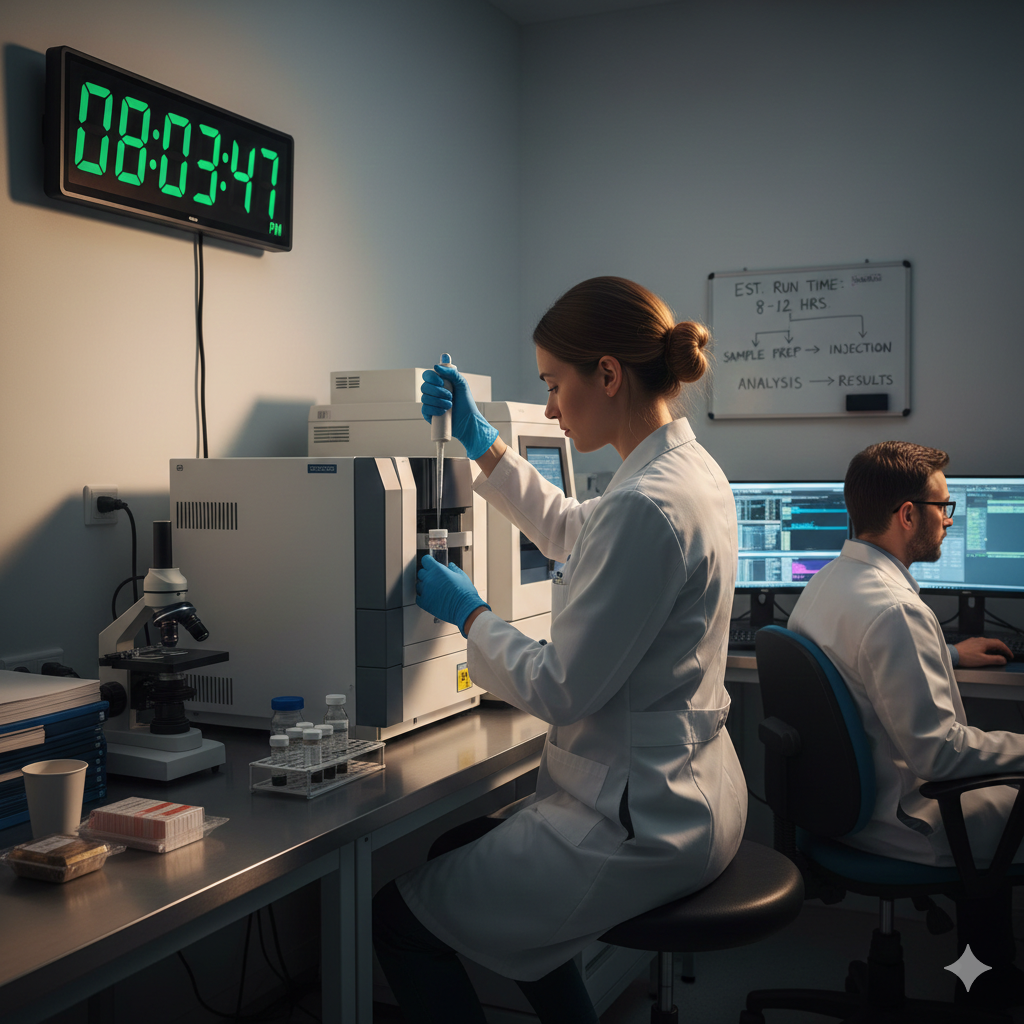
The peptide identity testing process involves multiple analytical stages that each contribute to the overall turnaround time. Initial sample reception and logging typically require one to two business days, during which laboratories verify sample integrity and prepare documentation. This administrative phase, though often overlooked, plays a crucial role in maintaining chain of custody and ensuring accurate result reporting for third party verified peptides.
Peptide HPLC Testing and Mass Spectrometry Methods
Once samples enter the analytical queue, technicians employ various methods including peptide HPLC testing, mass spectrometry peptide testing, and amino acid analysis. Each technique requires specific preparation protocols, calibration procedures, and runtime parameters. Understanding how to test peptides properly means recognizing that comprehensive analysis cannot be rushed beyond certain physical and chemical limitations inherent to these sophisticated instruments.
Standard Turnaround Times for Peptide Verification Testing
Commercial Peptide Testing Service Timelines
Most accredited peptide testing labs advertise standard turnaround times between five and ten business days for complete analytical panels. This timeframe encompasses sample receipt, preparation, instrumental analysis, data review, and peptide certificate of analysis generation. Facilities processing high volumes of samples often establish tier-based pricing structures where standard service represents the most economical option for non-urgent testing needs when you send peptides for testing.
Academic and Government Testing Centers
Academic and government laboratories frequently operate on extended timelines of two to three weeks due to different operational priorities and funding structures. These institutions may offer more specialized testing capabilities but typically cannot match the speed of commercial best peptide testing services. Private research organizations must weigh the trade-offs between peptide testing cost and project timeline requirements when selecting between academic and commercial testing partners.
What to Look for in Peptides When Choosing a Testing Service
Certificate of Analysis Peptide Testing Requirements
Selecting an appropriate testing laboratory requires evaluating several key performance indicators beyond simple turnaround time. Understanding what should be on a peptide COA is crucial for quality verification. Accreditation status, method validation documentation, and quality management systems provide insight into a facility's commitment to accurate results. Laboratories adhering to ISO/IEC 17025 standards demonstrate robust quality controls that minimize the risk of erroneous data.
Research Grade Peptide Testing Capabilities
When determining what to look for in peptides testing services, researchers should examine peptide COA requirements the laboratory can fulfill. Facilities equipped with modern analytical platforms for peptide HPLC testing and employing experienced scientists with advanced degrees typically deliver more reliable results. Customer service responsiveness and clear communication protocols also serve as important indicators of how smoothly the testing process will proceed from submission through final reporting.
How Same-Day and Express Peptide Testing Works
Priority Queue Systems for Independent Testing
Several specialized laboratories now offer expedited testing services with results available within 24 to 48 hours of sample receipt. These accelerated timelines require dedicated instrumentation, priority queue systems, and often premium peptide lab testing prices that can exceed standard testing costs by 50 to 200 percent. Express services prove invaluable when time-sensitive research demands immediate verification or when contamination concerns require rapid assessment.
Limitations of Rapid Quality Testing
The feasibility of same-day testing depends heavily on sample complexity and the specific analytical parameters requested. Simple purity assessments via peptide HPLC testing can often achieve rapid turnaround, while comprehensive characterization including full amino acid analysis peptides requires additional time regardless of priority status. Laboratories offering express services typically maintain reserve analytical capacity specifically designated for urgent requests.
Factors That Affect Peptide Lab Testing Speed
Sample Quality and Preparation Issues
Multiple variables influence how quickly laboratories can complete peptide verification testing beyond their stated standard turnaround times. Sample quality represents the most significant factor, as degraded or improperly stored peptides may require additional preparatory work or repeated analysis to obtain conclusive results. Samples arriving in insufficient quantities often necessitate method modifications that extend processing timelines and affect overall peptide testing cost.
Seasonal Demand and Equipment Maintenance
Seasonal fluctuations in submission volumes create predictable delays during peak periods, particularly in the first and third quarters when research budgets refresh and grant-funded projects accelerate. Laboratories experiencing equipment malfunctions or calibration issues may temporarily suspend operations for specific tests, pushing samples into extended queues. Geographic location also affects turnaround when shipping delays add days to the timeline for those wondering where to test peptides.
How to Know if Peptides Are Contaminated Before Testing
Visual Inspection for Bacterial Contamination Peptides
Visual inspection provides limited but valuable preliminary information about potential contamination issues before formal laboratory testing. Peptide powders exhibiting unusual discoloration, clumping, or odor may indicate degradation or bacterial contamination peptides. However, many contamination types remain invisible to casual observation, making independent peptide testing lab analysis the only definitive method for contamination detection.
Common Contaminant Types Requiring Testing
Understanding how to know if peptides are contaminated requires familiarity with common impurity sources in peptide synthesis and storage. Peptide endotoxin testing, heavy metal testing peptides, and residual solvent analysis represent frequent screening requirements that specialized testing can identify. Some laboratories offer preliminary screening tests that provide faster contamination assessments within two to three business days, allowing researchers to make initial decisions before committing to full analytical panels.
Peptide Certificate of Analysis: What the Timeline Tells You
How to Read Peptide COA Documents
The peptide certificate of analysis serves as the formal documentation of all testing results and typically represents the final deliverable in the testing timeline. Understanding how to read peptide COA documents is essential for quality verification. Laboratories with efficient data management systems can generate certificates within hours of completing instrumental analysis, while others may require several additional days for quality review and approval signatures.
Certificate of Analysis Peptide Testing Standards
Delays between analysis completion and certificate issuance sometimes indicate internal quality concerns requiring additional review or confirmatory testing. A comprehensive peptide COA should include purity percentage from HPLC, molecular weight confirmation from mass spectrometry peptide testing, and results from any contaminant screening such as peptide endotoxin testing. Reputable laboratories maintain transparent communication about situations where results fall outside expected parameters.
How to Check Peptide Purity Through HPLC and Mass Spectrometry
Peptide HPLC Testing for Purity Determination
High-performance liquid chromatography remains the gold standard for research grade peptide testing purity determination, with typical analysis times ranging from 20 to 60 minutes per sample depending on method complexity. Peptide HPLC testing separates peptide molecules from impurities based on their chemical properties, producing chromatograms that reveal purity percentages with high precision. Laboratories equipped with ultra-high-performance liquid chromatography systems can reduce individual run times while maintaining resolution.
Mass Spectrometry Peptide Testing and Amino Acid Analysis
Learning how to check peptide purity effectively means understanding that different analytical techniques provide complementary information. Mass spectrometry peptide testing confirms molecular weight and can identify specific impurities, while amino acid analysis peptides verifies sequence composition. Comprehensive peptide quality testing often employs multiple techniques sequentially, which naturally extends turnaround times but provides greater confidence in peptide identity. Single-method testing delivers faster results but may miss contaminants.
Where to Test Peptides: Comparing Top Labs by Speed
High-Throughput Commercial Testing Facilities
Among commercial facilities offering third party verified peptides analysis, turnaround times vary based on operational models and target markets. High-throughput laboratories processing hundreds of samples weekly often achieve consistent five to seven-day turnaround through optimized workflows and automation. Boutique analytical services catering to specialized peptide classes may operate on ten to fifteen-day timelines but offer customized method development.
Best Peptide Testing Service Options
Optima Labs has positioned itself competitively by offering standard seven-day turnaround for comprehensive analytical panels while maintaining expedited three-day services for priority samples. This dual-tier approach addresses diverse client needs without compromising analytical rigor. When evaluating where to test peptides, researchers should compare not only speed but also what should be on a peptide COA and overall peptide testing cost across providers.
Peptide Testing Cost vs Quality: Why Faster Isn't Always Better
Analytical Thoroughness vs Speed Trade-offs
The pursuit of rapid turnaround times must be balanced against analytical thoroughness and accuracy considerations. Rushing complex analyses increases the risk of overlooked impurities, misidentified peaks, or inadequately resolved chromatographic separations. Experienced laboratories recognize that certain peptide characteristics demand extended equilibration times, longer chromatographic runs, or additional confirmatory tests that cannot be meaningfully accelerated regardless of how much does peptide testing cost.
Quality Control in Third Party Peptide Testing
Quality control protocols built into accredited testing workflows serve essential functions that require specific timeframes to execute properly. Instrument calibration verification, standard curve validation, and replicate sample analysis all contribute to result reliability while adding to overall processing time. Laboratories offering suspiciously fast turnaround at budget peptide lab testing prices often achieve speed by eliminating these critical quality checkpoints, potentially delivering unreliable data.
Final Thoughts: Choosing the Best Peptide Testing Service
Making Informed Laboratory Selections
Selecting the best peptide testing service demands careful consideration of how turnaround time aligns with project requirements, budget constraints, and quality expectations. While expedited services provide valuable options for urgent situations, most research applications benefit more from reliable, thoroughly validated results than from marginally faster reporting. Establishing relationships with independent peptide testing lab partners who demonstrate consistent performance creates long-term value beyond any single project timeline.
Future of Peptide Verification Testing
The peptide quality testing landscape continues evolving as analytical technologies advance and market competition drives service improvements. Researchers who understand the technical factors governing turnaround times can make informed decisions that optimize both speed and accuracy. Whether choosing same-day express service or standard multi-day processing, the key lies in matching laboratory capabilities to specific project needs while maintaining unwavering commitment to third party verified peptides data quality.
Frequently Asked Questions
How long does peptide testing usually take?
Standard peptide testing typically requires five to ten business days from sample receipt to final certificate of analysis delivery. This timeframe includes sample preparation, instrumental analysis using peptide HPLC testing and mass spectrometry peptide testing, data review, and quality control verification. Express services can reduce this timeline to 24 to 48 hours for an additional fee, though comprehensive testing panels may require longer regardless of priority status. Shipping time to and from the laboratory adds to the total timeline, so researchers should account for three to five additional days when planning project schedules.
How much does peptide testing cost?
Peptide testing cost varies widely based on the analytical methods requested, turnaround time, and laboratory selected. Basic purity testing via peptide HPLC testing typically ranges from $150 to $400 per sample for standard service. Adding mass spectrometry peptide testing confirmation increases costs to $300 to $600 per sample. Comprehensive panels including amino acid analysis peptides, peptide endotoxin testing, and sterility verification can exceed $800 to $1,200 per sample. Expedited turnaround services generally add 50 to 200 percent premium to base peptide lab testing price. Volume discounts may apply for organizations submitting multiple samples regularly.
What should be on a peptide certificate of analysis?
A comprehensive peptide certificate of analysis should include several critical components for proper quality verification. The document must show purity percentage determined by peptide HPLC testing, typically with a chromatogram showing the separation profile. Molecular weight confirmation from mass spectrometry peptide testing verifies peptide identity. Additional testing results may include amino acid analysis peptides for sequence verification, peptide endotoxin testing results, heavy metal testing peptides screening, and moisture content. The COA should also include lot numbers, testing dates, method references, and laboratory contact information for traceability.
Where can I send peptides for testing?
Multiple options exist for those wondering where to test peptides for quality verification. Commercial third party peptide testing laboratories like Optima Labs offer comprehensive analytical services with various turnaround options and competitive peptide testing cost structures. Academic institutions with analytical chemistry departments may accept external samples, though typically with longer processing times. Independent peptide testing lab facilities specializing in pharmaceutical analysis provide another alternative. When selecting where to test peptides, evaluate factors including accreditation status, available testing methods, turnaround time, customer reviews, and what should be on a peptide COA from that facility.
How can you tell if a peptide has gone bad?
Degraded peptides often exhibit physical changes including discoloration from white or off-white to yellow or brown, clumping or caking of powder that was previously free-flowing, and unusual odors suggesting bacterial contamination peptides. However, many forms of peptide degradation remain invisible without laboratory testing. Peptide HPLC testing reveals degradation products appearing as additional peaks in the chromatogram, while mass spectrometry peptide testing can detect molecular weight changes indicating chemical modifications. Research grade peptide testing should be performed on any peptides stored improperly or beyond their stability period, as degradation can occur without obvious physical signs.
What is third party peptide testing?
Third party peptide testing refers to independent laboratory analysis performed by facilities not affiliated with the peptide manufacturer or supplier. Using an independent peptide testing lab provides unbiased verification of peptide quality, purity, and identity. Third party verified peptides undergo comprehensive analysis including peptide HPLC testing, mass spectrometry peptide testing, and often additional screens like peptide endotoxin testing. This independent verification ensures the peptide certificate of analysis accurately reflects product quality without conflicts of interest. Many researchers and institutions require third party peptide testing to validate supplier claims before using peptides in critical applications or human studies.