When you purchase research peptides, the difference between receiving exactly what you ordered and getting a contaminated or mislabeled product often comes down to one critical factor: third party peptide testing. Understanding how to test peptides and verify their authenticity through independent peptide verification is essential for researchers who depend on accurate results. This comprehensive guide reveals the sophisticated methods peptide testing laboratories use to confirm sample identity and ensure quality.
Whether you're wondering how to know if peptides are contaminated, seeking clarity on how to check peptide purity, or trying to decode a certificate of analysis peptides report, this article will walk you through every step of the verification process that reputable testing labs employ. Understanding peptide COA documentation and third party verification standards protects you from fake peptides and ensures research integrity.
Understanding the Importance of Sample Identity Verification
Why Identity Verification Matters in Peptide Research
Sample identity verification forms the foundation of reliable peptide testing. Before analyzing purity or contamination levels, laboratories must confirm that the sample matches what the label claims. This critical first step prevents cascading errors throughout the research process and protects both consumers and researchers from potentially harmful or ineffective compounds. Whether you need research grade peptides for laboratory work or pharmaceutical grade peptides for clinical applications, identity verification ensures authenticity.
The Risks of Misidentified Peptide Samples
The consequences of misidentified peptides extend far beyond wasted research dollars. Incorrect peptides can compromise entire studies, lead to false conclusions, and in some cases, pose safety risks. The growing problem of counterfeit peptides and fake peptides in the marketplace makes independent peptide authenticity verification more critical than ever. This is why professional testing labs implement multiple verification checkpoints throughout their analysis workflow.
What to Look for in Peptides Before Testing Begins
Initial Visual Inspection and Physical Characteristics
Professional testing laboratories begin their verification process the moment a sample arrives. Visual inspection serves as the initial screening method. Trained technicians examine the physical characteristics of the peptide, including color, texture, and consistency. While these observations alone cannot confirm identity, they can immediately flag obvious problems like contamination or degradation.
Documentation and Chain of Custody Review
Documentation review follows the visual assessment. Labs verify that submitted paperwork matches the sample, including lot numbers, manufacturer information, and storage conditions. This administrative verification creates an essential paper trail and helps identify potential mix-ups before expensive analytical testing begins.
Mass Spectrometry: The Gold Standard for Peptide Identification
How Mass Spectrometry Creates Molecular Fingerprints
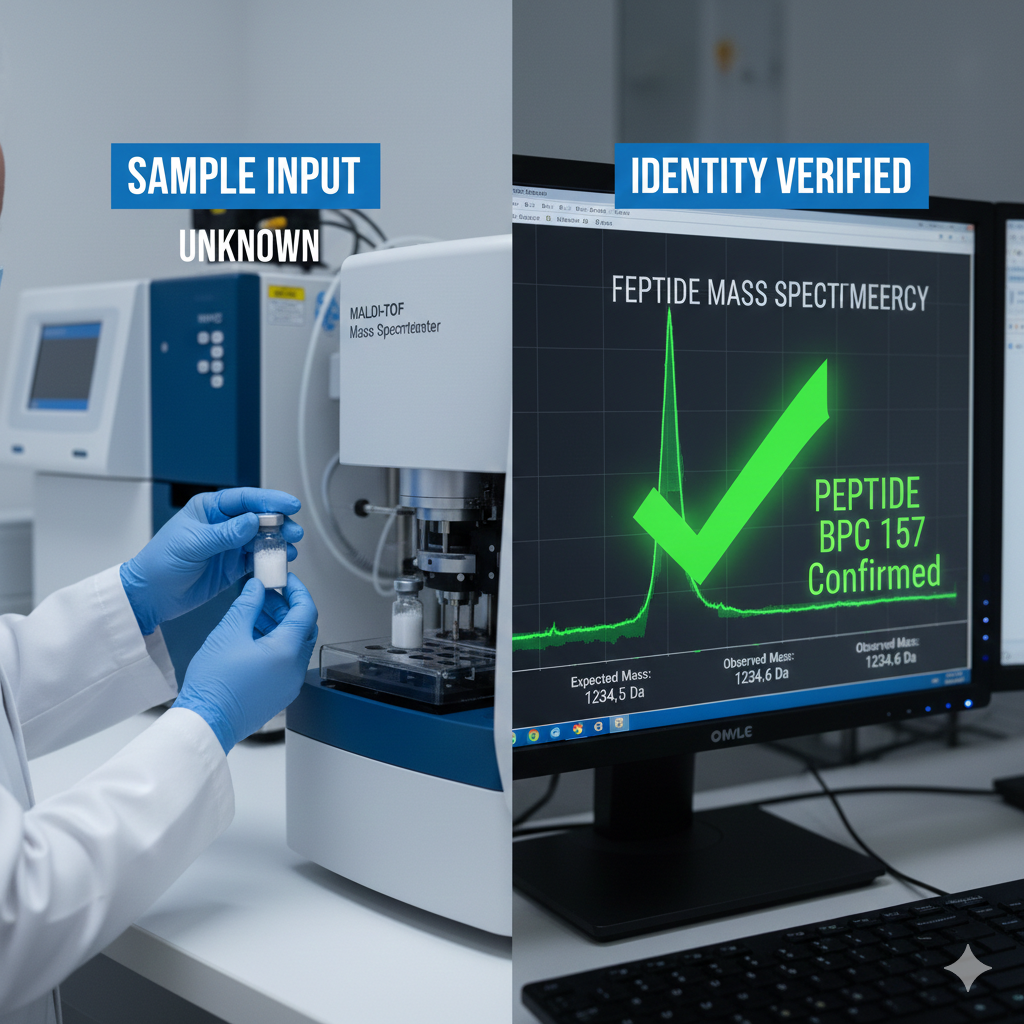
Mass spectrometry represents the most powerful tool in the peptide verification arsenal. This analytical technique measures the mass-to-charge ratio of molecules, creating a unique fingerprint for each peptide. When labs analyze a sample using mass spectrometry, they compare the resulting spectrum against known reference standards to confirm identity with remarkable precision.
MALDI-TOF and ESI Methods for Accurate Detection
Modern laboratories typically employ MALDI-TOF or ESI mass spectrometry for peptide analysis. LC-MS peptide analysis, which combines liquid chromatography with mass spectrometry, provides comprehensive data in a single workflow. These methods can detect molecular weights with accuracy down to a single atomic mass unit. If the observed mass deviates from the expected value by more than acceptable limits, the sample fails identity verification, indicating either mislabeling or significant impurities.
High-Performance Liquid Chromatography in Identity Confirmation
Understanding Retention Time Analysis
HPLC serves dual purposes in peptide testing laboratories. While widely recognized for purity assessment, this technique also provides valuable identity verification data. Each peptide exhibits characteristic retention times when passed through a chromatography column under standardized conditions. Testing labs maintain extensive databases of these retention profiles for comparison purposes.
Combining HPLC with UV Absorption Patterns
When technicians analyze an unknown sample, they compare its HPLC retention time against reference standards run under identical conditions. Matching retention times, combined with UV absorption patterns, provide strong supporting evidence for identity verification. However, responsible labs never rely on HPLC alone, as different peptides can occasionally exhibit similar chromatographic behavior.
How to Check Peptide Purity Through Multi-Method Analysis
Comprehensive Analytical Approaches to Purity Assessment
Determining peptide purity requires a comprehensive analytical approach that goes hand-in-hand with identity verification. Reputable testing laboratories combine multiple techniques to paint a complete picture of sample composition. HPLC typically serves as the primary purity assessment method, with mass spectrometry providing complementary data about impurity types.
Identifying and Characterizing Contaminants
The purity testing process reveals not just the percentage of target peptide present, but also the nature of contaminants. Peptide impurity detection identifies synthesis byproducts, truncated sequences, and deletion peptides that may interfere with research. Quality testing labs report both total purity and net peptide content, which accounts for water, salts, and other non-peptide components. They also identify major impurity peaks when possible, providing researchers with complete compositional information.
Amino Acid Analysis for Sequence Verification
Hydrolysis and Quantification Techniques
Amino acid analysis provides an orthogonal verification method that complements mass spectrometry. This technique involves complete hydrolysis of the peptide followed by quantification of individual amino acids. The resulting amino acid composition must match the theoretical composition of the claimed peptide identity.
When to Apply Amino Acid Testing
While amino acid analysis cannot determine sequence order, it effectively identifies gross composition errors and supports peptide synthesis verification. This method proves particularly valuable when testing longer peptides where mass spectrometry data may be ambiguous. Advanced laboratories use this technique selectively, applying it when other methods raise questions about sample identity or when clients require additional confirmation beyond standard testing protocols.
How to Know if Peptides are Contaminated: Detection Methods
Microbial Contamination Screening
Contamination detection requires vigilance across multiple fronts. Microbial contamination testing ensures samples are free from bacterial or fungal growth that could compromise research or safety. Testing labs employ endotoxin testing peptides protocols to detect bacterial contamination at extremely low levels. Peptide sterility testing becomes essential when peptides will be used in cell culture work or any application where microbial contamination poses risks.
Chemical and Heavy Metal Testing Protocols
Chemical contamination presents a different challenge. Mass spectrometry excels at detecting unexpected chemical species, while specialized tests screen for heavy metals, residual solvents, and synthesis byproducts. Professional laboratories maintain contamination testing protocols that align with regulatory guidelines and industry best practices.
Nuclear Magnetic Resonance Spectroscopy in Advanced Verification
Structural Detail and Non-Destructive Analysis
NMR spectroscopy offers unparalleled structural detail for peptide verification. While not routinely applied to every sample due to equipment costs and sample requirements, NMR provides definitive structural information when identity questions arise. This non-destructive technique reveals detailed information about molecular connectivity and three-dimensional structure.
When NMR Becomes Essential for Verification
Leading testing laboratories maintain NMR capabilities for challenging verification cases. When standard methods produce conflicting results or when clients require absolute confirmation of peptide structure, NMR spectroscopy serves as the ultimate arbiter. The technique demands significant expertise to interpret results but delivers unmatched structural certainty.
Reference Standard Requirements and Certification
Establishing Authenticated Reference Materials
Accurate identity verification depends critically on high-quality reference standards. Testing laboratories must maintain authenticated reference materials with known identity and purity. These standards undergo rigorous characterization and certification before use in routine testing workflows.
Sourcing and Maintaining Standard Integrity
Professional labs source reference standards from reputable suppliers or synthesize and characterize them in-house using multiple orthogonal techniques. Regular recertification ensures standard integrity over time. For peptide batch testing, laboratories maintain lot-specific reference data that allows accurate comparison across different production batches. Without properly validated reference materials, even the most sophisticated analytical equipment cannot provide reliable verification results.
Quality Control Measures Throughout the Testing Process
Comprehensive Quality Management Systems
Quality control extends beyond the analytical methods themselves. Accredited testing laboratories implement comprehensive peptide quality assurance systems that govern every aspect of the verification process. ISO 17025 peptide testing certification demonstrates that laboratories meet international standards for technical competence and quality management. For peptides intended for clinical research, GMP peptide testing ensures compliance with Good Manufacturing Practice regulations that govern pharmaceutical production.
Sample Tracking and Chain of Custody
Sample tracking systems prevent mix-ups from receipt through final reporting. Chain of custody documentation provides transparency and accountability. Quality laboratories maintain strict protocols for equipment calibration, analyst training, method validation, and regular proficiency testing. When evaluating testing laboratories, researchers should inquire about quality certifications, accreditations, and internal quality control practices that ensure reliable verification results.
Data Interpretation and Reporting Standards
Expert Analysis and Multiple Review Steps
Raw analytical data requires expert interpretation to draw meaningful conclusions about sample identity. Trained analysts evaluate spectra, chromatograms, and numerical results against acceptance criteria established through method validation. Professional testing laboratories employ multiple review steps to ensure data interpretation accuracy.
Clear Communication in Final Reports
Final reports should clearly communicate verification results in accessible language while maintaining scientific rigor. A comprehensive certificate of analysis peptides document includes method descriptions, acceptance criteria, observed results, and clear pass or fail conclusions. Understanding how to read a peptide COA empowers researchers to make informed decisions about sample quality. Reputable labs stand behind their results and provide technical support for clients who need help interpreting complex analytical data in their certificate of analysis.
How to Test Peptides: Choosing the Right Laboratory
Evaluating Laboratory Credentials and Capabilities
Selecting a peptide testing laboratory requires careful evaluation of capabilities, credentials, and communication. Look for labs offering independent peptide verification with demonstrated expertise in peptide analysis, modern instrumentation, and relevant accreditations. Third party peptide testing from an unbiased laboratory provides the most reliable quality assurance. ISO certification or similar quality standards indicate systematic approaches to testing accuracy and reliability.
Beyond Technical Specs: Service and Partnership
Beyond technical capabilities, consider turnaround times, pricing transparency, and customer service quality. The best testing laboratories act as partners in your research, offering guidance on appropriate testing protocols and helping interpret results in context. Don't hesitate to ask detailed questions about verification methods before committing to a testing provider.
Final Thoughts
Peptide identity verification stands as a cornerstone of research quality and safety. Professional testing laboratories employ sophisticated multi-method approaches that combine mass spectrometry, chromatography, and complementary techniques to confirm sample identity with confidence. Understanding these verification processes empowers researchers to make informed decisions about testing providers and interpret results effectively. As peptide research continues expanding across scientific disciplines, the role of rigorous identity verification only grows more critical to advancing knowledge while maintaining research integrity.
Frequently Asked Questions
How do you test the purity of peptides?
Peptide purity is primarily tested using high-performance liquid chromatography (HPLC), which separates the target peptide from impurities based on their chemical properties. The resulting chromatogram shows the percentage of the target compound versus contaminants. Mass spectrometry often complements HPLC testing by identifying the nature of impurities present in the sample, providing a complete purity profile.
What is peptide testing?
Peptide testing encompasses analytical procedures that verify identity, purity, potency, and safety of peptide compounds. Testing laboratories use multiple techniques including mass spectrometry, HPLC, amino acid analysis, and contamination screening to characterize peptide samples. The goal is confirming that purchased peptides match their claimed specifications and are free from harmful contaminants or significant impurities.
How do you verify a peptide sequence?
Peptide sequence verification relies primarily on tandem mass spectrometry (MS/MS), which fragments the peptide into smaller pieces and analyzes the resulting fragments. This fragmentation pattern creates a unique fingerprint that reveals the exact amino acid sequence. Amino acid analysis provides additional sequence confirmation by verifying the overall composition matches theoretical predictions for the claimed sequence.
How can you tell if peptides are good quality?
Good quality peptides exhibit high purity (typically above ninety-five percent), correct identity confirmed through mass spectrometry, and absence of significant contamination. Request a certificate of analysis from reputable suppliers that shows HPLC purity, mass spectrometry confirmation, and additional quality metrics. Physical characteristics like appropriate color and texture, combined with proper storage and handling documentation, also indicate quality peptides.
What is the gold standard for peptide identification?
Mass spectrometry represents the gold standard for peptide identification due to its ability to precisely measure molecular weight and, through tandem techniques, determine amino acid sequence. When combined with liquid chromatography (LC-MS), this method provides both identity confirmation and purity assessment in a single analysis. The technique's high sensitivity and specificity make it indispensable for definitive peptide characterization.
How long does peptide testing take?
Standard peptide testing typically requires five to ten business days from sample receipt to final report delivery. This timeframe includes sample preparation, multiple analytical methods, data review, and quality control checks. Expedited testing may be available for urgent needs, though rush services often carry premium pricing. Complex samples requiring additional verification methods may take longer to analyze completely.
Can contaminated peptides be detected visually?
Visual inspection can sometimes reveal obvious contamination such as discoloration, unusual texture, or foreign particles, but cannot detect most types of contamination. Microbial contamination, chemical impurities, and mislabeling remain invisible to the naked eye. Professional laboratory testing using mass spectrometry, HPLC, and specialized contamination assays is essential for comprehensively detecting and characterizing all forms of peptide contamination.
What certifications should a peptide testing lab have?
Reputable peptide testing laboratories should hold ISO certification (particularly ISO seventeen thousand twenty-five for testing laboratories) demonstrating adherence to international quality standards. Additional credentials may include GMP compliance, accreditation from national bodies, and certification for specific testing methods. These certifications ensure the laboratory maintains proper quality control systems, trained personnel, and validated analytical procedures for reliable testing results.
What should be included in a certificate of analysis for peptides?
A comprehensive peptide COA should include product identification details, batch numbers, purity percentage determined by HPLC, mass spectrometry confirmation of molecular weight, peptide content or net peptide content values, and storage recommendations. Quality certificates also document testing methods used, acceptance criteria, test dates, and analyst signatures. The certificate of analysis peptides document serves as proof that the peptide meets specified quality standards.
How can I identify fake or counterfeit peptides?
Identifying counterfeit peptides requires third party peptide testing through an independent laboratory. Warning signs include suspiciously low prices, lack of certificate of analysis, no batch-specific documentation, or refusal to provide samples for verification. Always request independent peptide verification through accredited testing labs. Authentic suppliers welcome third party testing and provide detailed COA documentation with traceable batch numbers and comprehensive analytical data.
What is the difference between research grade and pharmaceutical grade peptides?
Research grade peptides typically meet purity standards of ninety-five percent or higher and are suitable for laboratory research applications. Pharmaceutical grade peptides must meet more stringent GMP manufacturing standards, undergo additional quality testing including endotoxin and sterility testing, and maintain detailed documentation suitable for clinical use. Pharmaceutical grade peptides cost more due to enhanced quality assurance requirements and regulatory compliance testing.