Table of Contents
-
Understanding Why Peptide Dosing Accuracy Matters
-
The Basic Math Behind Peptide Reconstitution
-
Common Measurement Mistakes That Lead to Dangerous Overdoses
-
How to Test Peptides Before Your First Dose
-
What to Look for in Peptides When Verifying Quality
-
Reading Your Peptide Vial Labels Correctly
-
How to Know If Peptides Are Contaminated
-
Converting Milligrams to Milliliters Without Confusion
-
Using Insulin Syringes for Accurate Peptide Dosing
-
How to Check Peptide Purity Before Administration
-
Storage Practices That Affect Dosing Accuracy
-
Final Thoughts
-
Frequently Asked Questions
Understanding Why Peptide Dosing Accuracy Matters
The Consequences of Incorrect Peptide Calculations
Calculating peptide doses incorrectly can result in serious health consequences ranging from ineffective treatment to severe adverse reactions. Unlike traditional medications that come pre-measured, research peptides arrive as lyophilized powder requiring reconstitution and precise calculation. A single decimal point error can mean the difference between a therapeutic dose and a toxic one. Understanding peptide overdose symptoms becomes crucial because the responsibility falls entirely on the user to perform these calculations accurately, which is why understanding the fundamental principles of peptide dosing is not optional but essential for safety.
Why Microgram Precision Matters in Peptide Therapy
Many people underestimate the precision required when working with peptides measured in micrograms. The human margin for error becomes dangerously narrow when dealing with substances this potent. Without proper knowledge of reconstitution ratios, peptide syringe units, and concentration calculations, users risk administering doses that are ten or even one hundred times higher than intended. Peptide side effects from miscalculation can range from mild discomfort to life-threatening reactions depending on the compound and the degree of error.
The Basic Math Behind Peptide Reconstitution
Understanding Concentration Ratios in Peptide Solutions
Reconstituting peptides involves adding bacteriostatic water to lyophilized powder to create a liquid solution. The concentration of your final solution depends on how much bacteriostatic water to add to peptides based on your desired strength. For example, if you have a 5mg vial of peptide and add 2ml of bacteriostatic water, your concentration becomes 2.5mg per ml. This foundational calculation determines every subsequent dose you draw from that vial. Using a peptide dosage calculator can help verify your math, but understanding the underlying principles remains essential for catching errors.
Converting Your Concentration to Actual Doses
Understanding this ratio is critical because it affects how much liquid you need to draw into your syringe to achieve your desired dose. If your protocol calls for 250mcg and your concentration is 2.5mg per ml, you need to convert units properly. Since 2.5mg equals 2500mcg per ml, you would need 0.1ml to get 250mcg. A peptide reconstitution calculator can streamline these conversions, but this type of calculation must become second nature before you ever draw your first dose to prevent dangerous mistakes.
Common Measurement Mistakes That Lead to Dangerous Overdoses
Confusing Units on Insulin Syringes
The most frequent error occurs when people confuse milligrams with micrograms or milliliters with units on an insulin syringe. A standard insulin syringe shows units, not milliliters, and understanding that 100 units equals 1ml is crucial. Someone who confuses these measurements might accidentally take ten times their intended dose simply by misreading the syringe markings. Learning to read peptide syringe units correctly prevents the majority of accidental overdoses that result in severe peptide side effects.
Concentration Changes Between Different Vials
Another common mistake involves failing to account for the concentration when switching between different peptide batches. If you reconstitute one vial with 1ml of water and the next with 2ml, your dose volume changes even though your target dose remains the same. Many users wonder how much bacteriostatic water to add to peptides, and while there is no single correct answer, maintaining consistent reconstitution practices helps prevent these concentration-related errors that catch even experienced users off guard.
How to Test Peptides Before Your First Dose
Third-Party Laboratory Testing Standards
Before administering any peptide, verification of its contents is a critical safety step that too many people skip. Third-party laboratory testing represents the gold standard for confirming what is actually inside your vial matches what the label claims. Reputable testing services use methods like high-performance liquid chromatography and mass spectrometry to identify the peptide sequence and measure its concentration accurately. Peptide sterility testing is equally important because contaminated products can cause severe immune reactions regardless of dosing accuracy.
Visual Inspection as a Preliminary Screen
Visual inspection serves as a preliminary screening method, though it cannot replace laboratory analysis. Properly lyophilized peptides should appear as a solid white or off-white cake at the bottom of the vial. Any discoloration, unusual texture, or failure to dissolve properly after reconstitution raises immediate red flags about quality or contamination. Recognizing signs of contaminated peptides early prevents administration of dangerous products that could cause harm even when dosed correctly.
What to Look for in Peptides When Verifying Quality
Certificate of Analysis Requirements
Quality peptides begin with sourcing from manufacturers who provide a certificate of analysis peptides for every batch. These certificates should detail the purity percentage, actual peptide content, and results from contamination screening including endotoxin testing peptides. A legitimate certificate of analysis comes from an independent laboratory, not from the manufacturer's internal testing, which eliminates potential conflicts of interest. Understanding the difference between FDA approved peptides and research peptides helps set appropriate expectations for quality standards and legal status.
Physical Appearance Indicators
The physical appearance of the peptide provides initial quality indicators. The lyophilized cake should be uniform in color and texture without any crystallization or oil residue. After reconstitution, the solution should be clear or slightly opalescent depending on the specific peptide. Cloudiness, floating particles, or any visible debris indicates either contamination or degradation that makes the peptide unsafe for use. Knowing the signs of contaminated peptides allows you to identify problems before injection.
Reading Your Peptide Vial Labels Correctly
Interpreting Peptide Content and Purity Percentages
Peptide vial labels contain critical information that directly impacts your dosing calculations, yet many users misinterpret these details. The label should clearly state the total peptide content in the vial, typically expressed in milligrams. Some labels may also include the purity percentage, which affects the actual amount of active peptide present. A vial labeled as 5mg at 98% purity actually contains 4.9mg of the actual peptide. Understanding peptide vial expiration dates and manufacturing information helps ensure you are working with products within their effective lifespan.
Tracking Batch Numbers and Manufacturing Dates
Batch numbers and manufacturing dates are equally important for tracking quality and stability. Peptides degrade over time, and knowing when your vial was produced helps you assess whether it remains within its effective lifespan. Storing this information allows you to correlate any unexpected results or peptide side effects with specific production batches if problems arise. This tracking becomes particularly important when determining how long do reconstituted peptides last in your specific storage conditions.
How to Know If Peptides Are Contaminated
Visible Signs of Peptide Contamination
Contamination in peptides can occur during manufacturing, storage, or reconstitution, and detecting it requires both visual assessment and laboratory testing. Bacterial contamination often manifests as cloudiness or visible particles floating in the reconstituted solution. However, many dangerous contaminants including heavy metals or endotoxins remain completely invisible to the naked eye. Recognizing signs of contaminated peptides through visual inspection provides your first line of defense against using compromised products.
Laboratory Screening for Hidden Contaminants
The most reliable method to know if peptides are contaminated involves sending samples to analytical laboratories that screen for bacterial endotoxins, heavy metals, and residual solvents. Endotoxin testing peptides is particularly critical because these bacterial byproducts can trigger severe immune responses or toxic reactions even in small amounts. While visual inspection catches obvious problems, only comprehensive laboratory analysis including peptide sterility testing provides certainty about the safety of your peptides before administration.
Converting Milligrams to Milliliters Without Confusion
Understanding Mass Versus Volume Measurements
The conversion between milligrams and milliliters trips up countless users because these units measure different properties. Milligrams measure mass while milliliters measure volume, and you cannot directly convert between them without knowing the concentration. This is why understanding your reconstitution ratio becomes the bridge that connects the peptide amount in your vial to the liquid volume you draw into your syringe. Many users search for a peptide reconstitution calculator to help with these conversions, which can be valuable tools when used correctly.
Creating Personal Dosing Reference Charts
Creating a simple calculation chart specific to your reconstitution method eliminates repeated math errors. If you consistently reconstitute 5mg vials with 2ml of bacteriostatic water, you can create a reference showing that 0.1ml equals 250mcg, 0.2ml equals 500mcg, and so forth. This visual reference catches mistakes before they reach your syringe and provides a quick verification method for each dose. A personalized peptide dosage calculator based on your specific reconstitution method becomes an invaluable safety tool.
Using Insulin Syringes for Accurate Peptide Dosing
Reading Insulin Syringe Unit Markings
Insulin syringes are the preferred tool for peptide administration because they provide precise measurements in small volumes. Understanding that a 1ml insulin syringe has 100 unit markings means each unit represents 0.01ml. When your calculations determine you need 0.25ml of solution, you draw to the 25-unit mark on your syringe. Confusion about peptide syringe units causes more dosing errors than any other factor, making proper syringe education essential for safe peptide use.
Selecting the Right Syringe Size for Your Doses
Different insulin syringe sizes offer varying levels of precision based on your dose requirements. A 0.5ml syringe has 50 units and allows more accurate measurement of very small doses, while a 1ml syringe works better for larger volumes. Selecting the appropriate syringe size based on your typical dose range improves accuracy and reduces the chance of misreading the measurement markings. Matching your syringe capacity to your reconstitution volume ensures you can draw accurate doses without exceeding syringe capacity.
How to Check Peptide Purity Before Administration
High-Performance Liquid Chromatography Testing
Checking peptide purity requires analytical testing that identifies both the quantity and quality of the peptide in your vial. High-performance liquid chromatography separates the peptide from any impurities and measures the percentage of the sample that consists of the target peptide. Pharmaceutical-grade peptides typically show purity levels above 98%, while lower-quality products may contain significant amounts of related peptides or synthesis byproducts. A proper certificate of analysis peptides should include detailed chromatography results showing exactly what compounds are present.
Mass Spectrometry for Molecular Verification
Mass spectrometry complements purity testing by confirming the molecular weight of the peptide matches its expected structure. This verification ensures you actually have the correct peptide rather than a different compound or degraded version. Together, these analytical methods provide comprehensive confirmation that your peptide is both pure and properly identified before you consider administration. This level of verification becomes particularly important with research peptides that lack the regulatory oversight of FDA approved peptides.
Storage Practices That Affect Dosing Accuracy
Temperature Requirements for Peptide Stability
Improper storage degrades peptides and changes their effective concentration, which means your carefully calculated doses deliver less peptide than expected. Lyophilized peptide storage requires refrigeration or freezing for long-term preservation, though unopened vials remain stable at room temperature for short periods. Once reconstituted, peptides typically need refrigeration and should be used within the timeframe specified by stability data. Understanding how long do reconstituted peptides last depends on the specific compound, but most remain viable for 14 to 30 days when properly refrigerated.
Avoiding Temperature Fluctuations
Temperature fluctuations accelerate peptide degradation more than consistent cold storage. Repeatedly removing your vial from the refrigerator and allowing it to warm before returning it creates condensation and temperature stress that breaks down the peptide structure. Maintaining consistent cold storage and minimizing temperature changes preserves the peptide integrity and ensures your doses remain accurate throughout the vial's usable life. Proper lyophilized peptide storage practices extend shelf life and maintain the quality needed for accurate dosing.
Final Thoughts
Calculating peptide doses accurately demands attention to detail, mathematical precision, and verification at every step. The combination of proper reconstitution calculations, correct understanding of peptide syringe units, and quality verification through testing creates the foundation for safe peptide use. Cutting corners on any of these steps introduces unacceptable risks that can result in serious health consequences including severe peptide side effects or overdose symptoms. Taking the time to understand these principles and implementing verification procedures protects both your health and the effectiveness of your peptide protocols. When in doubt, seeking guidance from qualified professionals and utilizing third-party testing services like those offered by Optima Labs provides the certainty needed for confident and safe peptide administration.
Frequently Asked Questions
How do you test peptides for quality?
Testing peptides for quality requires sending samples to accredited third-party laboratories that perform high-performance liquid chromatography and mass spectrometry analysis. These tests identify the peptide sequence, measure purity percentage, and screen for contamination with heavy metals, bacteria, and endotoxins. Peptide sterility testing and endotoxin testing peptides are essential components of comprehensive quality verification. Visual inspection of the lyophilized powder and reconstituted solution provides preliminary quality indicators, but only comprehensive laboratory analysis confirms safety and authenticity. Reputable testing companies provide detailed certificate of analysis peptides showing exact composition and purity levels.
What are the signs of contaminated peptides?
Signs of contaminated peptides include cloudiness after reconstitution, floating particles, unusual discoloration, or failure to dissolve completely when mixed with bacteriostatic water. However, many dangerous contaminants like bacterial endotoxins and heavy metals remain invisible without laboratory testing. Physical reactions after administration such as excessive inflammation, fever, or unusual immune responses may also indicate contamination. The only reliable method to confirm contamination involves analytical testing that screens for bacterial presence, endotoxin levels, and heavy metal content through proper peptide sterility testing protocols.
How much bacteriostatic water should I add to peptides?
The amount of bacteriostatic water to add to peptides depends on your desired concentration and the total peptide content in the vial. Common reconstitution volumes range from 1ml to 3ml for a 5mg vial, with 2ml being a popular choice that creates manageable concentrations for calculation purposes. Using a peptide reconstitution calculator can help determine the optimal water volume for your target dose. The key is maintaining consistency with your reconstitution method so your dose calculations remain accurate across different vials. More water creates a more dilute solution requiring larger injection volumes, while less water creates higher concentrations with smaller injection volumes.
Can you tell peptide purity by looking at it?
Visual inspection cannot determine peptide purity accurately, though it may reveal obvious quality problems. Pure peptides typically appear as uniform white or off-white lyophilized cakes that dissolve into clear solutions, but appearance alone does not confirm purity levels or verify the correct peptide is present. Laboratory testing using high-performance liquid chromatography is the only reliable method to measure actual purity percentages. A proper certificate of analysis peptides from an independent laboratory is essential for confirming quality. Relying solely on visual assessment for purity determination creates serious safety risks and may result in using contaminated or mislabeled products.
How long do reconstituted peptides last?
Reconstituted peptides typically remain stable for 14 to 30 days when stored properly in a refrigerator at temperatures between 2 and 8 degrees Celsius. The exact stability window varies by peptide type, with some degrading faster than others. Factors affecting longevity include storage temperature consistency, exposure to light, and contamination from repeated needle punctures. Peptides showing discoloration, cloudiness, or particles after reconstitution should be discarded immediately regardless of age. Following proper sterile technique and lyophilized peptide storage protocols maximizes the usable life of your reconstituted peptides while maintaining dosing accuracy.
What is a peptide dosage calculator?
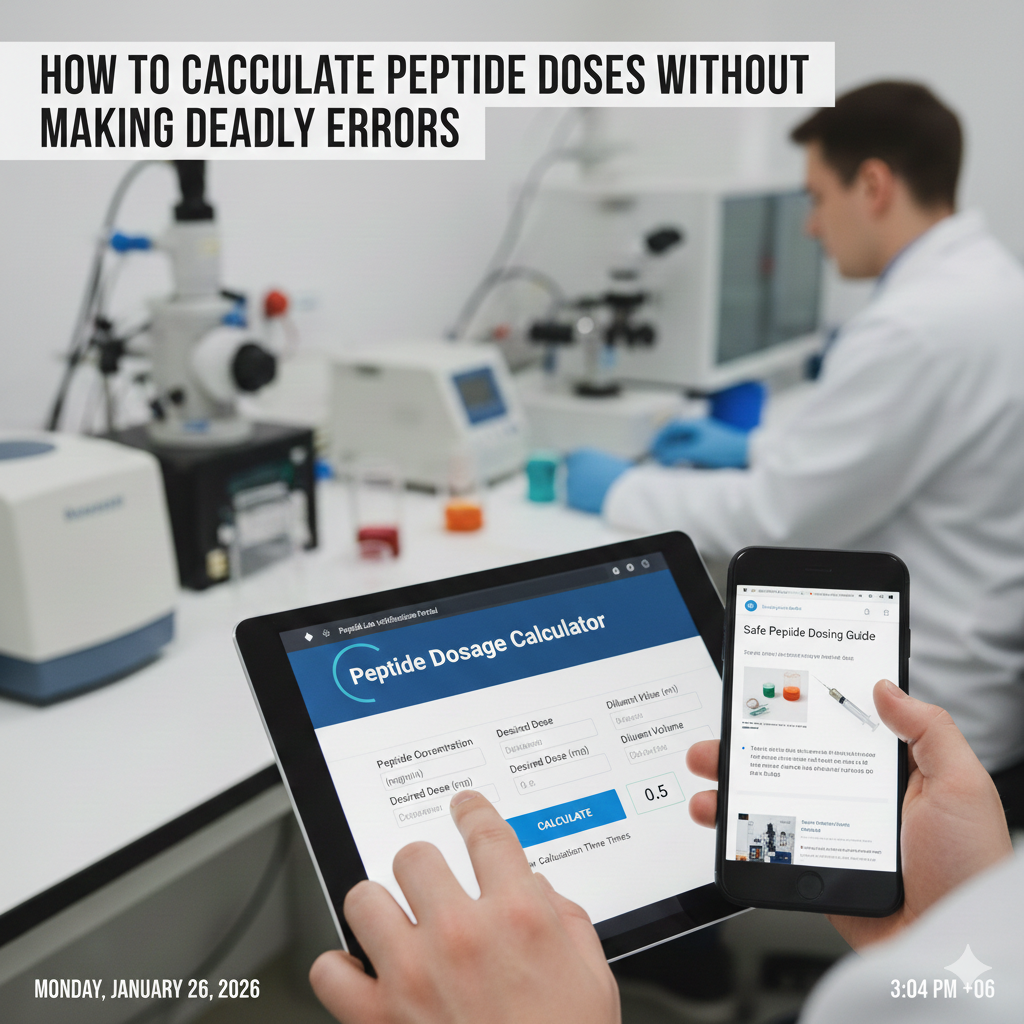
A peptide dosage calculator is a tool that helps users determine the correct volume of reconstituted peptide solution to inject based on their target dose and reconstitution ratio. These calculators eliminate manual conversion errors by automatically computing how much bacteriostatic water to add to peptides and what syringe volume corresponds to your desired microgram or milligram dose. While peptide reconstitution calculators are helpful aids, users should still understand the underlying mathematics to verify results and catch any input errors that could lead to dangerous dosing mistakes.
What are common peptide overdose symptoms?
Peptide overdose symptoms vary significantly depending on which peptide was administered and the degree of overdose. Common symptoms may include severe nausea, dizziness, rapid heart rate, extreme fatigue, dangerous drops in blood sugar, severe headaches, or unusual flushing and skin reactions. Some peptides can cause serious cardiovascular effects or hormonal imbalances when overdosed. If you suspect a peptide overdose, seek immediate medical attention and bring information about the specific peptide, dose administered, and when it was taken. Prevention through accurate dosing calculations and understanding peptide syringe units remains far safer than dealing with overdose consequences.