Table of Contents
-
Understanding Peptide Contamination and Why It Matters
-
Common Types of Peptide Impurities You Should Know About
-
Physical Signs That Indicate Your Peptides May Be Contaminated
-
How to Read and Verify Peptide Certificate of Analysis
-
HPLC and Mass Spectrometry: Essential Testing Methods Explained
-
Endotoxin Contamination: The Hidden Danger in Peptide Products
-
What to Look for When Buying Research Peptides Online
-
Net Peptide Content vs Purity: Understanding the Difference
-
Storage and Handling Issues That Lead to Peptide Degradation
-
How Contaminated Peptides Affect Your Research Results
-
Understanding Regulatory Standards for Peptide Quality
-
Red Flags When Evaluating Peptide Suppliers
-
Professional Testing Services for Peptide Quality Verification
-
Frequently Asked Questions About Peptide Contamination
Understanding Peptide Contamination and Why It Matters
Peptide contamination represents one of the most significant challenges facing researchers and individuals using synthetic peptides today. When you purchase peptides for research applications or any other purpose, you're trusting that what arrives matches the label on the vial. Unfortunately, the reality is often quite different. Studies have documented cases where peptides purchased from commercial suppliers contained significant amounts of completely unrelated peptide sequences, sometimes representing up to one percent of the total product weight.
The consequences of using contaminated peptides extend far beyond wasted money. Research data becomes unreliable, experimental results cannot be reproduced, and in cases involving cell cultures or animal studies, contaminated peptides can introduce harmful substances that compromise the entire investigation. For those using peptides therapeutically, contamination risks include exposure to bacterial endotoxins, toxic residual chemicals, and unknown substances that could trigger adverse reactions.
Why Peptide Purity Analysis Is Critical for Research Success
Understanding how to identify contaminated peptides begins with recognizing that purity testing is not optional but essential for any serious research application. The peptide synthesis process involves multiple steps where impurities can be introduced, from incomplete coupling reactions during solid phase peptide synthesis to cross-contamination between different peptide batches at manufacturing facilities. Without proper verification, you cannot be certain of what you're actually working with.
Common Types of Peptide Impurities You Should Know About
The spectrum of potential contaminants in peptide products is broader than most people realize. Peptide-related impurities typically fall into several distinct categories, each arising from different stages of the manufacturing process.
Synthesis-related impurities include deletion sequences where one or more amino acids are missing from the intended sequence, truncated peptides that are shorter than the target sequence, and peptides with incomplete deprotection where protective chemical groups weren't fully removed. These impurities stem directly from inefficiencies in the solid phase peptide synthesis process, particularly during Fmoc deprotection steps or amino acid coupling reactions.
Chemical contaminants represent another major category. Trifluoroacetic acid, commonly abbreviated as TFA, is used during peptide synthesis to cleave protective groups and free peptides from solid-phase resin. This compound forms salts with basic amino acids in the peptide sequence and can comprise a significant portion of the final product weight. TFA salts in peptides are particularly common when the sequence contains arginine, lysine, or histidine residues. While TFA itself isn't always harmful, trifluoroacetate peptides can interfere with certain cellular assays, inhibiting cell proliferation in some cases while paradoxically increasing cell viability in others. High TFA content also artificially increases the total weight of the product, reducing the actual net peptide content and requiring careful calculation adjustments for accurate dosing.
Residual solvents from the manufacturing process, including dimethylformamide, dichloromethane, and acetonitrile, may persist in peptide preparations if purification wasn't thorough. Heavy metal contamination from synthesis equipment or reagents poses particular concern due to the toxicity of these elements and their ability to catalyze peptide degradation over time. Additionally, peptide aggregation problems can arise from incomplete purification or improper storage, where peptide molecules cluster together into larger complexes that reduce biological activity and create insoluble precipitates that interfere with experimental work.
The Endotoxin Problem in Peptide Manufacturing
Perhaps the most insidious form of contamination involves bacterial endotoxins, which are lipopolysaccharides from the outer membrane of gram-negative bacteria. Even at extremely low concentrations measured in parts per billion, endotoxins can trigger powerful immune responses. These molecules stimulate the production of interleukins, tumor necrosis factors, prostaglandins, and platelet activating factors, causing inflammation and fever. Endotoxin contamination is particularly problematic because these substances are heat-stable, surviving normal sterilization procedures, and they adhere strongly to hydrophobic surfaces like laboratory plasticware, facilitating their spread.
For anyone conducting immunological assays or cell culture experiments, endotoxin-contaminated peptides generate erratic data that can mislead entire research projects. The immune system's exquisite sensitivity to these bacterial components means that trace amounts undetectable by standard purity tests can still profoundly affect experimental outcomes.
Physical Signs That Indicate Your Peptides May Be Contaminated
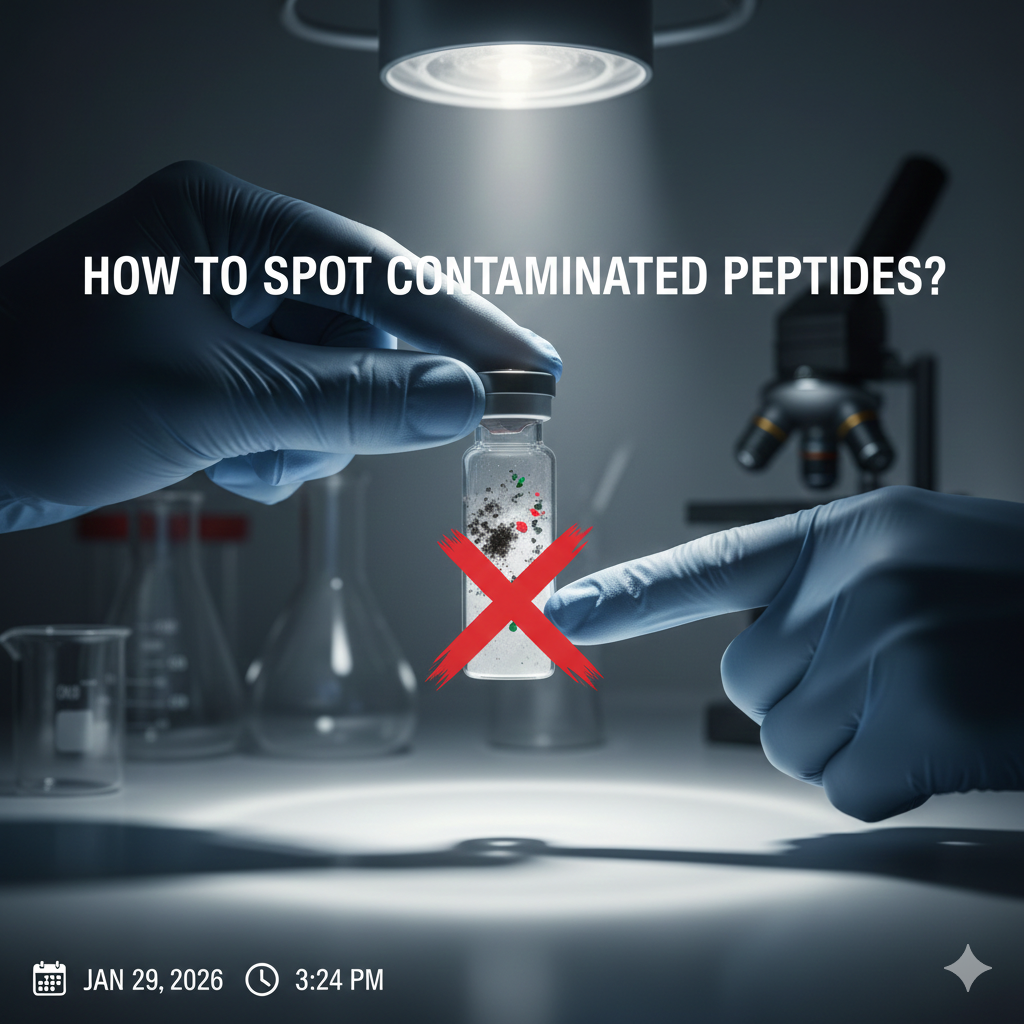
While sophisticated analytical techniques provide definitive answers about peptide purity, certain physical observations can raise initial red flags suggesting potential contamination issues. However, it's crucial to understand that visual assessment alone is unreliable and potentially dangerous when evaluating peptide degradation signs.
A common misconception holds that clear, transparent peptide solutions indicate high purity while cloudy solutions suggest contamination. This assumption is fundamentally flawed. Highly pure peptides can appear somewhat cloudy due to their physical properties or the presence of harmless excipients, while severely contaminated or impure peptides may look crystal clear. Clarity and purity exist as independent properties with no reliable correlation.
Unusual odors, unexpected colors in lyophilized peptide powder, or difficulty dissolving peptides in recommended solvents may indicate problems, but these peptide degradation signs are inconsistent and subjective. Some peptides are naturally difficult to solubilize regardless of their purity, particularly those containing high proportions of hydrophobic amino acids. Color changes in reconstituted peptides over time, particularly yellowing or browning, can suggest oxidation or other chemical degradation, but again these signs require analytical confirmation.
Warning Signs During Experimental Use
More reliable indicators of contamination often emerge during actual use. If peptides that should be biologically inactive suddenly trigger unexpected cellular responses, cross-contamination with bioactive peptide sequences might be responsible. Documented cases exist where researchers discovered that peptides showing surprising activity were actually contaminated with completely different peptide sequences from prior synthesis runs at the manufacturing facility.
Injection site reactions when using peptides subcutaneously can sometimes signal contamination issues. While mild redness or swelling is common and often represents normal immune system response to the peptide itself, spreading redness that increases in size, severe pain, blistering, or signs of infection warrant immediate concern and may indicate the presence of bacterial contamination or toxic impurities.
How to Read and Verify Peptide Certificate of Analysis
The certificate of analysis, universally abbreviated as COA, represents your primary tool for assessing peptide quality before purchase. Understanding how to critically evaluate this document separates informed buyers from those vulnerable to low-quality products.
A legitimate COA should include several essential components. First, it must provide HPLC purity data, ideally accompanied by the actual chromatogram showing the separation of different components in the peptide sample. The purity percentage represents the area of the main peak relative to the total area of all detected peaks. For most research applications, purity should be at least 95 percent, while sensitive assays requiring high precision may demand 98 percent or higher.
Mass spectrometry data confirming the molecular weight of the peptide is equally important. The COA should show both the theoretical molecular weight calculated from the amino acid sequence and the observed molecular weight from actual measurement. These values should match closely, though small differences representing sodium or potassium adducts sometimes appear and can be acceptable.
Red Flags in Certificate of Analysis Documents
Certain warning signs in COA documents should trigger skepticism. Generic statements claiming high purity without supporting analytical data lack credibility. Missing chromatograms, absent mass spectrometry results, or purity percentages listed without any indication of the analytical method used suggest inadequate quality control.
Pay attention to whether the COA is batch-specific or generic. Each peptide synthesis batch should have its own unique batch-specific COA reflecting the actual analysis of that particular lot. Suppliers providing the same COA for all batches of a peptide are cutting corners on quality testing. The lot number on the COA should match the lot number on your peptide vial labeling exactly. Mismatched lot numbers indicate the supplier is providing generic documentation rather than testing each batch individually.
The COA should also specify net peptide content, which differs from purity. Net peptide content indicates what percentage of the vial's total weight consists of actual peptide material versus non-peptide components like water, salts, and counterions. Even highly pure peptides may have net peptide content ranging from 60 to 90 percent due to salt formation and absorbed moisture. This information is critical for accurate dosing calculations. Peptide vial labeling should clearly display the lot number, molecular weight, purity percentage, and net peptide content to enable proper verification against the COA documentation.
HPLC and Mass Spectrometry: Essential Testing Methods Explained
High-performance liquid chromatography, abbreviated HPLC, serves as the gold standard for peptide purity analysis. This technique separates different molecular components in a sample based on their interactions with a stationary phase, typically using reversed-phase chromatography where molecules separate according to their hydrophobicity.
During HPLC analysis, the peptide sample is injected into a column and washed through with a gradient of increasingly organic solvent. Different peptide species elute at different retention times, producing peaks on a chromatogram when they pass through a UV detector set to 210 to 220 nanometers, wavelengths where peptide bonds absorb light strongly.
The resulting chromatogram provides visual evidence of purity. A single, sharp, dominant peak indicates high purity, while multiple peaks suggest the presence of peptide-related impurities like deletion sequences or oxidized forms. The ratio of the main peak area to total peak area gives the HPLC purity percentage.
Mass Spectrometry for Identity Confirmation
Mass spectrometry complements HPLC by confirming the molecular weight and therefore the identity of the peptide. The two most common techniques are matrix-assisted laser desorption ionization time-of-flight mass spectrometry, abbreviated MALDI-TOF MS, and electrospray ionization mass spectrometry, known as ESI-MS.
MALDI-TOF peptides analysis works by embedding the peptide in a crystalline matrix that absorbs laser energy, causing the peptide to ionize and fly through a vacuum tube. The time it takes to reach the detector reveals its molecular weight. This technique excels at analyzing larger peptides and works well with crude mixtures. ESI-MS peptides analysis instead creates charged droplets of peptide solution, evaporates the solvent, and measures the resulting ions. ESI-MS provides exceptional sensitivity and precision, making it ideal for smaller peptides and detailed structural analysis.
These methods ionize peptide molecules and measure their mass-to-charge ratio, producing spectra that reveal the molecular weight with high precision. Even trace contaminants can be detected if they have different molecular weights from the target peptide. Mass spectrometry can identify impurities that HPLC might miss, particularly when contaminating peptides happen to have similar retention times to the desired product.
Advanced laboratories employ both techniques together, combining the separation power of liquid chromatography with the mass accuracy of mass spectrometry in a single LC-MS system. This approach provides the most comprehensive characterization of peptide purity and identity.
Endotoxin Contamination: The Hidden Danger in Peptide Products
Bacterial endotoxin contamination deserves special attention due to its prevalence and the severity of problems it causes. These lipopolysaccharide molecules originate from the cell walls of gram-negative bacteria that may be present during peptide synthesis or introduced during handling and storage.
The limulus amebocyte lysate test, abbreviated LAL test, serves as the standard method for detecting endotoxins. This assay uses blood cells from horseshoe crabs, which form a gel in the presence of even minute quantities of endotoxin. Peptides intended for injection or cell culture applications should always be tested for endotoxin contamination, but many suppliers skip this step to reduce costs.
Endotoxin levels are measured in endotoxin units per milligram of peptide. For cell culture applications, levels should typically be below 1 EU per milligram, while injectable preparations often require even lower limits depending on the intended use.
How Endotoxins Affect Research and Clinical Applications
The impact of endotoxin contamination extends across multiple research domains. In immunological studies, contaminated peptides stimulate unwanted immune activation that can completely obscure the actual biological effects being studied. Cell viability assays become unreliable as endotoxins trigger inflammatory responses and apoptosis independent of the peptide's intended activity.
For individuals using peptides therapeutically, endotoxin exposure can cause pyrogenic reactions ranging from mild fever and chills to severe septic shock in extreme cases. The body's immune system recognizes endotoxins through specific receptors on immune cells, triggering a cascade of inflammatory signaling that can be dangerous, particularly in vulnerable populations.
What to Look for When Buying Research Peptides Online
The explosion of online peptide vendors has made these compounds widely accessible, but quality varies dramatically across suppliers. Distinguishing reputable sources from unreliable ones requires careful evaluation of several key factors, particularly as the market has seen an increase in fake peptides and counterfeit products.
Peptide supplier verification should be your first priority before making any purchase. Legitimate research peptide suppliers clearly state that their products are labeled as research use only peptides, abbreviated RUO peptides, and not for human consumption. This disclaimer reflects regulatory reality, as most research peptides lack FDA approval for therapeutic use. Vendors making medical claims or marketing products for human use without appropriate approvals should be avoided, as they may be selling counterfeit peptides or misrepresenting product quality.
How to tell fake peptides from authentic products starts with examining the vendor's transparency. Manufacturing transparency indicates quality commitment. Suppliers should disclose their country of manufacture, whether synthesis occurs in-house or through third-party contractors, and what quality control procedures are standard. Companies emphasizing their domestic manufacturing, particularly in regions with strong pharmaceutical regulations, generally maintain higher standards than those outsourcing to unregulated facilities.
Understanding the difference between GMP grade peptides vs research grade helps set appropriate expectations. Good Manufacturing Practice, abbreviated GMP, grade peptides meet pharmaceutical manufacturing standards and undergo rigorous quality control suitable for clinical applications. Research grade peptides, while still requiring high purity for scientific use, don't undergo the same extensive validation. Legitimate suppliers clearly distinguish between these grades rather than falsely claiming all products meet pharmaceutical standards.
Evaluating Third-Party Testing and Documentation
Progressive suppliers provide or facilitate third party peptide testing. Independent laboratory analysis by facilities specializing in pharmaceutical quality control adds credibility beyond manufacturer self-reporting. Some companies publish test results from multiple batches on their websites, demonstrating consistency and transparency.
Third party testing services typically include multiple analytical methods to comprehensively characterize peptide quality. Amino acid analysis peptides, often abbreviated as AAA peptides, involves hydrolyzing the peptide into individual amino acids and quantifying each component. This technique confirms the amino acid composition matches the expected sequence and determines net peptide content by measuring actual peptide material versus salts and moisture. The combination of amino acid analysis with HPLC and mass spectrometry provides the most complete picture of peptide quality.
The availability of detailed product documentation beyond basic COAs suggests serious quality commitment. Technical bulletins addressing known impurities, solubility recommendations based on testing, and storage guidance specific to each peptide indicate the supplier understands their products deeply. Batch-specific COA documentation, where each production lot receives its own certificate of analysis rather than generic statements applied to all batches, demonstrates genuine quality control rather than superficial claims.
Customer support responsiveness can reveal underlying company culture. Suppliers willing to discuss their synthesis and purification protocols, answer technical questions about analytical methods, and provide additional testing data when requested typically deliver higher quality products than those offering generic responses or avoiding detailed inquiries.
Net Peptide Content vs Purity: Understanding the Difference
Many people confuse peptide purity with net peptide content, but these represent distinct measurements addressing different aspects of peptide quality. Understanding this difference is essential for accurate experimental design and proper dosing.
HPLC purity indicates the percentage of the target peptide relative to other peptide-type impurities in the sample. A peptide with 98 percent HPLC purity means that 98 percent of the peptidic material is the correct sequence, while 2 percent consists of deletion sequences, truncated chains, or other peptide-related contaminants.
Net peptide content, in contrast, indicates what fraction of the total vial weight consists of peptide material of any kind, versus non-peptide components like trifluoroacetate salts, water, and residual solvents. Even a peptide with 99 percent HPLC purity might have only 70 percent net peptide content if it carries substantial counterions and absorbed moisture.
Why Net Peptide Content Matters for Dosing Accuracy
This distinction becomes critical when calculating molar concentrations for experiments. If you weigh out 10 milligrams of peptide assuming it's 100 percent pure peptide material, but the actual net peptide content is 70 percent, your concentration calculations will be off by 30 percent. This error can completely invalidate dose-response studies and quantitative assays.
Net peptide content is typically determined through amino acid analysis, where the peptide is hydrolyzed into individual amino acids that are then separated and quantified, or through elemental analysis measuring the actual atomic composition. High-quality suppliers report both HPLC purity and net peptide content on their COAs, providing all necessary information for accurate use.
Storage and Handling Issues That Lead to Peptide Degradation
Even high-purity peptides can become contaminated or degraded through improper storage and handling. Understanding how environmental factors affect peptide stability helps maintain quality throughout the product lifecycle.
Lyophilized peptide storage requires careful attention to temperature and humidity control. Peptides should be stored at negative 20 degrees Celsius in their lyophilized form, protected from light and moisture. Exposure to room temperature, particularly in humid environments, allows peptides to absorb water from the air, which can accelerate degradation reactions. Light exposure, especially UV light, can cause oxidation of sensitive amino acids like methionine, tryptophan, and cysteine.
Peptide freeze-thaw cycles represent one of the most common causes of degradation. Each time a peptide solution is frozen and thawed, ice crystal formation can damage peptide structure, while temperature fluctuations promote aggregation and chemical modification. This degradation generates new peptide species distinct from the original sequence, reducing both purity and biological activity over time. To avoid this problem, researchers should prepare single-use aliquots immediately after reconstitution rather than storing large volumes that require repeated access.
Preventing Microbial Contamination During Use
When peptides must be stored in solution rather than lyophilized powder, microbial contamination becomes a significant risk. Peptide solutions provide excellent growth medium for bacteria and fungi, particularly if they contain buffers with biological components.
How to reconstitute peptides correctly plays a crucial role in preventing contamination. The most common peptide reconstitution mistakes include using non-sterile water, touching the vial opening with non-sterile implements, and reconstituting in non-sterile environments. Always use bacteriostatic water for peptides when creating stock solutions that will be stored for more than a few days. Bacteriostatic water contains 0.9 percent benzyl alcohol as a preservative, which inhibits bacterial growth in reconstituted peptide solutions.
Peptide solubility testing should be performed carefully using sterile techniques. Using sterile buffers for peptide dissolution and filtering solutions through 0.2-micrometer filters can remove most bacteria, though this won't eliminate endotoxins already present. Storing peptide solutions in small aliquots prevents repeated access to the same container, reducing contamination risk and eliminating freeze-thaw cycles.
Adding preservatives like sodium azide can prevent microbial growth, but these substances may interfere with certain assays and should only be used when compatible with the intended application. For cell culture or injection use, preservative-free preparations are essential. Understanding proper reconstitution techniques and peptide solubility requirements specific to each sequence helps maintain solution quality and prevent contamination during preparation and storage.
How Contaminated Peptides Affect Your Research Results
The impact of peptide contamination on research outcomes ranges from subtle experimental variability to complete experimental failure. Understanding these effects helps researchers recognize when contamination might be affecting their work.
In binding assays and receptor-ligand studies, impure peptides introduce competing species that can interfere with target interactions. Deletion sequences or truncated peptides might bind the same receptor with different affinities, creating complex dose-response curves that don't reflect the true biological activity of the intended peptide.
Cellular assays suffer particularly from contamination issues. Endotoxin contamination stimulates immune cells independently of the peptide being studied, generating false positive results in inflammation assays and confounding interpretation of immune modulatory effects. Toxic impurities like residual solvents or heavy metals can reduce cell viability, suggesting the peptide itself is cytotoxic when actually the contamination is responsible.
Reproducibility Problems Across Laboratories
One of the most frustrating consequences of peptide contamination appears when trying to reproduce published results. Different batches of the same peptide from the same supplier can vary in their impurity profiles, leading to inconsistent results between experiments. When researchers in different laboratories purchase peptides from different vendors, variations in synthesis and purification methods introduce additional variability that makes reproducibility nearly impossible.
This problem has contributed to the broader reproducibility crisis in biomedical research, where an estimated 50 percent or more of preclinical studies cannot be replicated. Billions of research dollars are wasted annually on experiments using inadequately characterized reagents, including contaminated peptides.
Understanding Regulatory Standards for Peptide Quality
The regulatory landscape for peptides varies dramatically depending on their intended use, and understanding these distinctions helps buyers identify appropriate quality levels for their applications. While research use only peptides face minimal regulatory oversight, therapeutic peptides must meet stringent manufacturing and testing requirements.
In the United States, compounding pharmacies operating under section 503a pharmacy regulations can prepare customized peptide medications for individual patients based on valid prescriptions. These facilities must follow state pharmacy regulations but aren't subject to full FDA manufacturing requirements. In contrast, 503b peptide pharmacy operations, known as outsourcing facilities, can produce larger batches of compounded drugs without individual prescriptions but face more rigorous federal oversight including regular FDA inspections and mandatory adverse event reporting.
The distinction between these regulatory pathways matters because it affects quality control practices and contamination risk. Section 503b facilities generally maintain higher quality standards, including more comprehensive testing for sterility, endotoxins, and potency. When peptides are marketed for therapeutic use, understanding whether they originate from 503a pharmacies, 503b facilities, or FDA-approved manufacturers helps assess the reliability of quality claims.
GMP Manufacturing Standards and Peptide Purity
Good Manufacturing Practice, abbreviated GMP, represents the pharmaceutical industry standard for quality control and contamination prevention. GMP grade peptides undergo synthesis and purification in facilities that follow strict protocols for equipment maintenance, environmental monitoring, personnel training, and documentation. Every step from raw material sourcing through final product release involves documented procedures designed to minimize contamination risk.
Research grade peptides, while potentially very pure from an analytical standpoint, don't necessarily come from GMP facilities and may lack the comprehensive quality systems that prevent cross-contamination between batches or ensure consistent manufacturing practices. This distinction matters most when peptides transition from research to clinical applications, where regulatory agencies demand proof of GMP compliance.
Red Flags When Evaluating Peptide Suppliers
Certain warning signs should trigger caution when considering peptide suppliers. Recognizing these red flags helps avoid low-quality products and potentially dangerous contamination.
Unusually low prices compared to established suppliers often indicate corners being cut in synthesis, purification, or quality control. High-quality peptide synthesis requires expensive reagents, specialized equipment, and skilled personnel. Suppliers offering prices far below market rates are likely compromising somewhere in the process.
Missing or inadequate analytical data represents another critical red flag. Suppliers unwilling to provide batch-specific COAs, refusing to share chromatograms or mass spectra, or providing only generic quality statements without supporting data should be avoided. Legitimate suppliers view analytical documentation as a selling point, not something to hide.
Marketing Claims That Should Raise Concerns
Be skeptical of suppliers making exaggerated purity claims without supporting evidence. Statements promising 99 percent or higher purity for all peptides regardless of sequence difficulty suggest dishonest representation, as some peptides are inherently challenging to purify to such levels.
Products marketed with medical claims but sold as research chemicals indicate regulatory evasion. FDA-approved peptide therapeutics undergo rigorous testing and manufacturing oversight. Research-grade peptides lack this scrutiny and should never be described as suitable for human use by reputable suppliers.
Vague or misleading source information, such as claiming domestic manufacturing when products are actually imported, or hiding the actual country of origin, suggests potential quality concerns. Transparency about supply chains indicates confidence in production standards.
Professional Testing Services for Peptide Quality Verification
For researchers requiring absolute certainty about peptide quality, independent third-party testing services provide unbiased analysis beyond manufacturer-provided data. These laboratories specialize in pharmaceutical quality control and apply validated analytical methods to peptide characterization.
Third-party testing typically includes HPLC analysis using validated methods, mass spectrometry for molecular weight confirmation, and additional analyses like amino acid analysis for net peptide content determination. Advanced services may offer specialized testing for endotoxins, residual solvents, heavy metals, and other specific contaminants relevant to the intended application.
The cost of third-party testing represents a small fraction of the total research budget but can save enormous expense by preventing failed experiments due to contaminated reagents. For high-stakes research, clinical trials, or any work intended for publication in peer-reviewed journals, independent testing provides crucial documentation of reagent quality.
When to Invest in Additional Testing
While routine third-party testing of every peptide purchase may be unnecessary, certain situations warrant this investment. Novel peptides without established suppliers, peptides for clinical applications, large-scale purchases representing significant financial investment, and any situation where previous experiments showed unexpected results all benefit from independent verification.
Published research increasingly requires documentation of reagent quality and validation. Journals may request analytical data confirming peptide identity and purity as part of supplementary materials. Having independent testing results readily available streamlines the publication process and strengthens confidence in published findings.
Frequently Asked Questions About Peptide Contamination
How do you test if peptides are real and pure?
The most reliable method combines HPLC analysis for purity with mass spectrometry for identity confirmation. HPLC separates the peptide from impurities and quantifies purity percentage, while mass spectrometry verifies the molecular weight matches the expected sequence. Request a certificate of analysis from suppliers showing both HPLC chromatogram and mass spectrum. For absolute certainty, third-party laboratory testing provides independent verification beyond manufacturer claims.
What purity level should I look for when buying peptides?
For most research applications, peptides should be at least 95 percent pure by HPLC analysis. Sensitive quantitative assays, clinical trials, or studies requiring high precision benefit from 98 percent purity or higher. However, purity alone doesn't tell the complete story. Also verify net peptide content, which accounts for salts and moisture, as this affects accurate dosing calculations. Match purity requirements to your specific application rather than always demanding the highest available grade.
Can peptide contamination cause health problems?
Yes, contaminated peptides can cause serious health issues, particularly when used therapeutically outside proper medical supervision. Bacterial endotoxin contamination triggers immune responses ranging from fever and inflammation to potentially life-threatening septic shock. Toxic residual chemicals from synthesis can damage cells and organs. Unknown peptide contaminants might cause allergic reactions or unpredicted biological effects. Anyone experiencing spreading redness at injection sites, severe pain, systemic symptoms, or unexpected reactions should stop use immediately and seek medical attention.
How can you tell if peptides are contaminated by looking at them?
Visual inspection alone cannot reliably determine peptide contamination. Clear solutions don't guarantee purity, and cloudiness doesn't necessarily indicate contamination. Some pure peptides appear cloudy due to their physical properties, while severely contaminated peptides may look crystal clear. Never rely on appearance, smell, or taste to assess peptide quality. These approaches provide no useful information and may expose you to toxic contaminants. Always demand proper analytical testing documentation instead.
What is the difference between HPLC purity and net peptide content?
HPLC purity measures the target peptide as a percentage of total peptide material, indicating how much consists of the correct sequence versus peptide-related impurities like deletion sequences. Net peptide content measures actual peptide material as a percentage of total vial weight, accounting for non-peptide components like trifluoroacetate salts, water, and residual solvents. A peptide can be 98 percent pure by HPLC but only 70 percent net peptide content due to high salt content. Both values are necessary for accurate concentration calculations.
How should peptides be stored to prevent contamination and degradation?
Store lyophilized peptides at negative 20 degrees Celsius in sealed containers protected from light and moisture. Keep peptides in their dry powder form until immediately before use. If solutions must be stored, use sterile buffers and consider filtering through 0.2-micrometer filters to remove bacteria. Divide solutions into single-use aliquots to avoid repeated freeze-thaw cycles, which cause degradation. Never store peptide solutions at room temperature for extended periods, as this promotes both chemical degradation and microbial growth.
Should I trust peptides that don't come with a certificate of analysis?
No, never purchase peptides without a batch-specific certificate of analysis. The COA provides essential information about purity, identity, molecular weight, and quality control testing. Suppliers refusing to provide COAs likely skip necessary testing or have results they don't want to share. A proper COA should include HPLC chromatogram, mass spectrometry data, net peptide content, and recommended storage conditions. Without this documentation, you have no way to verify you're receiving what you paid for or assess whether the product is suitable for your application.
How should I reconstitute peptides to avoid contamination?
Always reconstitute peptides using sterile bacteriostatic water for peptides or sterile water for injection if the solution will be used within 24 hours. Work in a clean environment, preferably in a laminar flow hood for critical applications. Never touch the vial stopper with your fingers or non-sterile implements. Common peptide reconstitution mistakes include using tap water, reusing syringes, and reconstituting in non-sterile conditions. Add the solvent slowly down the inside wall of the vial rather than directly onto the peptide powder to minimize foaming and aggregation. Gently swirl rather than shaking vigorously, as vigorous agitation can denature peptides and promote aggregation. Store reconstituted solutions in single-use aliquots at negative 20 degrees Celsius to prevent both microbial contamination and degradation from freeze-thaw cycles.