Table of Contents
-
Understanding Peptide Discoloration
-
What Causes Peptides to Change Color
-
How to Know If Peptides Are Contaminated
-
The Science Behind Peptide Degradation
-
How to Check Peptide Purity at Home
-
What to Look for in Peptides Before Use
-
Storage Mistakes That Cause Color Changes
-
How to Test Peptides for Safety
-
Signs Your Peptide Has Gone Bad
-
When Yellow or Brown Peptides Are Still Usable
-
Professional Testing vs Visual Inspection
-
Final Thoughts
-
Frequently Asked Questions
Understanding Peptide Discoloration
Why Color Changes Cause Concern
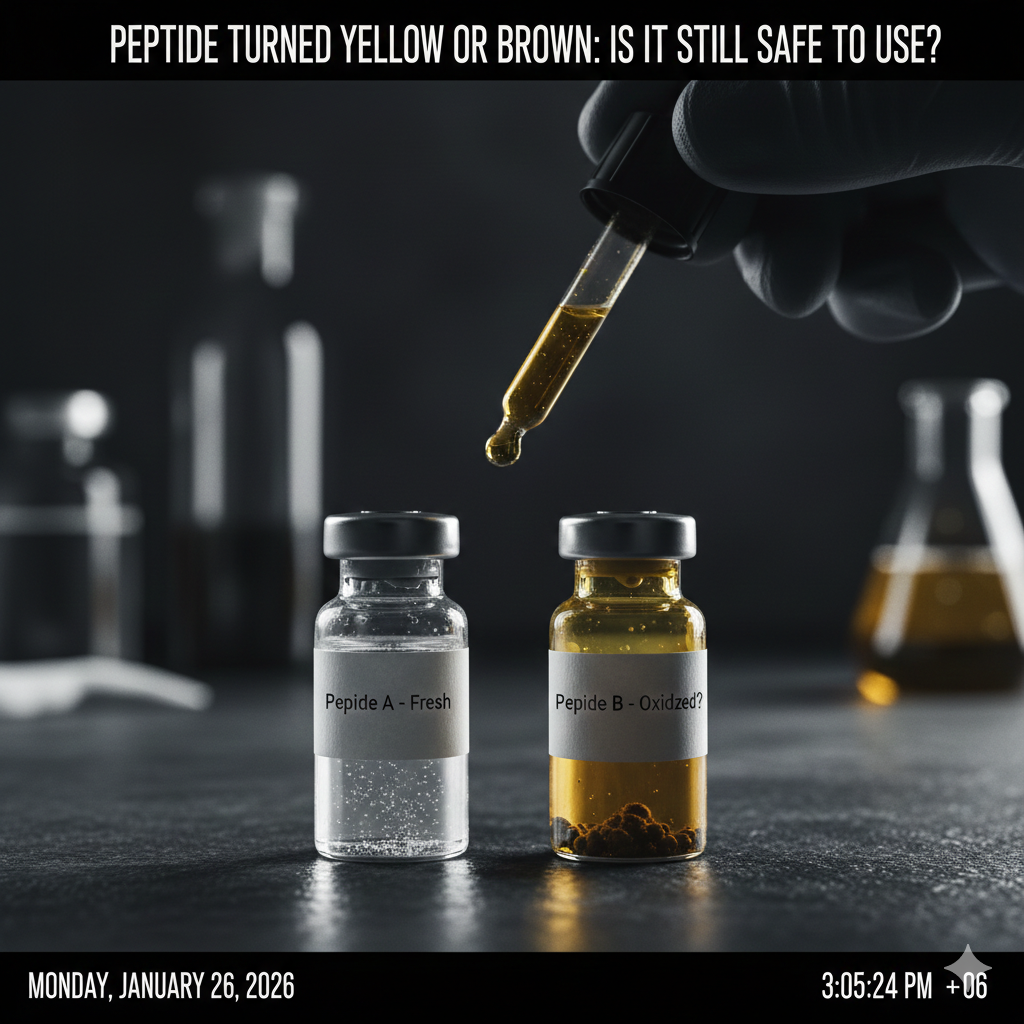
When you open your peptide vial and notice a yellowish or brownish tint instead of the expected white powder, panic might set in. This color change is one of the most common concerns among peptide users, and for good reason. The appearance of your peptide can indicate its quality, stability, and safety. However, not all discoloration means your peptide is unusable or dangerous.
The Delicate Nature of Peptide Compounds
Peptides are delicate chains of amino acids that can react to environmental factors like light, temperature, and oxygen exposure. These reactions sometimes manifest as visible color changes. Understanding what causes these changes and how to properly evaluate your peptide's condition is essential for anyone investing in these compounds for research or therapeutic purposes.
What Causes Peptides to Change Color
Oxidation as the Primary Culprit
Several factors contribute to peptide discoloration, and identifying the root cause helps determine whether the product remains viable. Oxidation stands as the primary culprit behind color changes in peptide powders. When amino acids within the peptide chain interact with oxygen molecules, they undergo chemical modifications that often produce yellowish or brownish hues.
Temperature-Related Degradation
Temperature fluctuations also accelerate degradation processes. Peptides exposed to heat above their recommended storage temperature experience accelerated breakdown of their molecular structure. This thermal stress doesn't just affect potency but can also trigger color changes as the amino acid bonds weaken and reform in altered configurations.
Light-Induced Chemical Changes
Light exposure, particularly UV light, initiates photodegradation in many peptide sequences. Certain amino acids like tryptophan, tyrosine, and histidine are especially photosensitive. When these amino acids absorb light energy, they undergo structural changes that frequently result in visible discoloration while simultaneously reducing the peptide's effectiveness.
How to Know If Peptides Are Contaminated
Visual Signs of Contamination
Contamination presents differently than simple degradation, and recognizing the distinction is crucial for safety. Bacterial or fungal contamination typically introduces additional visual cues beyond color changes. You might notice clumping, unusual textures, or the presence of foreign particles that weren't visible when you first received the product.
The Smell Test for Detecting Problems
The smell test offers another contamination indicator, though it should be performed carefully. Pure peptides generally have little to no odor. A strong, unpleasant, or unusual smell suggests bacterial growth or chemical contamination. However, this method has limitations since not all contaminants produce detectable odors.
Reconstituted Solution Warning Signs
Reconstituted peptides show contamination more readily than lyophilized powders. If your bacteriostatic water solution becomes cloudy, develops floating particles, or shows any haziness beyond the normal appearance after reconstitution, contamination is likely. These signs should never be ignored, as using contaminated peptides can introduce serious health risks.
The Science Behind Peptide Degradation
The Maillard Reaction in Peptides
Peptide degradation follows predictable chemical pathways that help explain color changes. The Maillard reaction, commonly known for browning food, can also occur in peptide powders containing trace sugars or reducing agents. This non-enzymatic browning creates melanoidins, which give the characteristic brown coloration without necessarily indicating complete peptide destruction.
Amino Acid Oxidation Patterns
Oxidative stress affects specific amino acids differently. Methionine and cysteine residues are particularly vulnerable to oxidation, forming sulfoxides and sulfones that alter the peptide's color and activity. Tryptophan oxidation produces N-formylkynurenine, a yellow compound that explains why some peptides develop yellow tints over time.
Aggregation and Light Scattering Effects
Peptide aggregation represents another degradation mechanism that can cause color changes. When individual peptide molecules clump together, they form larger structures that scatter light differently than the original powder. These aggregates may appear darker or more yellow than properly stored, non-aggregated peptides.
How to Check Peptide Purity at Home
Visual Assessment Techniques
Visual inspection provides the first line of assessment when evaluating peptide purity. Fresh, high-quality peptides typically appear as fine white or off-white powders with consistent texture throughout the vial. Any deviation from this baseline warrants closer examination, though slight color variations don't automatically indicate complete degradation.
The Reconstitution Quality Test
The reconstitution test offers valuable insights into peptide condition. Learning about reconstituting peptides correctly helps you identify quality issues early. When you add bacteriostatic water to your peptide, it should dissolve completely within a few minutes with gentle swirling. Incomplete dissolution, persistent cloudiness, or the formation of visible particles suggests either degradation or the presence of impurities that interfere with proper reconstitution.
Monitoring Solution Stability Over Time
Observing how your reconstituted peptide behaves over time also reveals important information. Proper peptide vial storage practices ensure maximum stability throughout the usage period. A properly prepared peptide solution should remain clear and stable when refrigerated. If the solution develops color, becomes cloudy, or shows precipitation within the expected usage window, the peptide's integrity is questionable.
What to Look for in Peptides Before Use
Vacuum Seal Integrity Check
Quality assessment begins before you even reconstitute your peptide. The vacuum seal on lyophilized peptides should remain intact until you're ready to use them. A broken seal suggests possible exposure to moisture and air, which accelerates degradation. The presence of a vacuum can be verified by the resistance you feel when inserting a needle through the rubber stopper.
Certificate of Analysis Verification
Certificate of analysis documents from reputable suppliers provide baseline quality metrics. These certificates should include purity percentages, typically above 98% for research-grade peptides, along with mass spectrometry results confirming the correct molecular weight. Comparing your peptide's appearance to these documented standards helps identify significant deviations.
Packaging Quality Indicators
Packaging quality reflects supplier attention to detail and proper handling. Peptides should arrive in amber or opaque vials that protect against light exposure, accompanied by appropriate desiccants to control moisture. Poor packaging often correlates with compromised product quality, regardless of the peptide's appearance.
Storage Mistakes That Cause Color Changes
Room Temperature Storage Dangers
Improper storage accounts for the majority of peptide discoloration cases encountered by researchers and users. Storing lyophilized peptides at room temperature rather than in refrigerated conditions dramatically accelerates degradation. Many people ask how long do peptides last when stored improperly, and the answer is concerning. Even a few weeks at room temperature can trigger color changes that months of proper refrigeration wouldn't produce. Understanding proper peptide storage temperature requirements is essential for maintaining product quality.
Temperature Cycling Problems
Repeated temperature cycling poses another common problem. Removing peptides from the freezer for brief periods, then returning them, creates condensation that introduces moisture into the vial. This moisture initiates hydrolysis reactions that break down peptide bonds and often manifest as color changes alongside potency loss.
Environmental Humidity Exposure
Exposure to bathroom or kitchen environments introduces humidity that compromises peptide stability. Even with the cap sealed, temperature fluctuations in these rooms can draw moisture into the vial through microscopic imperfections in the seal. This explains why peptides stored in these locations often show premature discoloration.
How to Test Peptides for Safety
HPLC Analysis for Purity Quantification
Professional laboratory testing represents the gold standard for peptide safety verification. High-performance liquid chromatography (HPLC) analysis quantifies purity by separating the peptide from degradation products and impurities. This method reveals exactly what percentage of your product consists of the intended peptide sequence versus breakdown products.
Mass Spectrometry for Identity Confirmation
Mass spectrometry confirms molecular identity and detects contaminants at very low concentrations. This technique measures the mass-to-charge ratio of ionized peptide fragments, creating a fingerprint that verifies you have the correct compound. When combined with HPLC, mass spectrometry provides comprehensive quality assurance.
Endotoxin Testing Requirements
Endotoxin testing is critical for peptides intended for injection. Bacterial endotoxins can contaminate peptides during manufacturing or through improper handling, causing severe inflammatory responses when introduced into the body. Limulus amebocyte lysate (LAL) testing detects these endotoxins at clinically relevant levels.
Third-Party Testing Services
Third-party testing services have emerged specifically for peptide verification. Companies like Optima Labs (optimalabs.org) offer accessible testing options that provide detailed purity analysis, contamination screening, and verification of peptide identity. For those wondering where to test peptides, these specialized services bridge the gap between visual inspection and full laboratory capabilities. While peptide testing cost varies depending on the analysis depth required, the investment often proves worthwhile compared to the risk of using compromised compounds. These services bridge the gap between visual inspection and full laboratory capabilities.
Signs Your Peptide Has Gone Bad
Texture and Consistency Changes
Complete peptide degradation produces unmistakable signs that extend beyond simple color changes. A peptide that has fully degraded often becomes sticky or develops a paste-like consistency rather than maintaining its powder form. This texture change indicates significant moisture absorption and chemical breakdown.
Chemical Odor Development
Strong chemical odors signal advanced degradation or contamination. While fresh peptides have minimal scent, degraded samples may emit ammonia-like smells or other unpleasant odors resulting from amino acid breakdown. These volatile compounds indicate the peptide has undergone substantial chemical changes.
Complete Reconstitution Failure
Failure to reconstitute properly provides definitive evidence of peptide compromise. If your peptide won't dissolve even after extended gentle agitation, or if it leaves substantial residue in the vial, the molecular structure has likely been damaged beyond usability. This insolubility means the peptide cannot be properly dosed or utilized.
When Yellow or Brown Peptides Are Still Usable
Minor Discoloration Assessment
Slight discoloration doesn't automatically render peptides unusable, particularly when other quality indicators remain positive. A faint yellow or tan tint in an otherwise normal-appearing peptide may indicate minor oxidation of specific amino acids while the majority of the sequence remains intact and functional.
Natural Color Variations in Peptide Sequences
Some peptide sequences naturally exhibit slight color due to their amino acid composition. Peptides containing multiple tryptophan or tyrosine residues may appear slightly off-white or cream-colored even when perfectly fresh. Understanding your specific peptide's expected appearance helps distinguish normal variation from degradation.
Evaluating Discoloration Severity
The extent of discoloration matters significantly. A light yellow powder that reconstitutes clearly and completely may retain most of its potency, whereas a dark brown or black powder indicates extensive degradation. When in doubt, professional testing can quantify remaining purity and help determine whether the peptide remains viable.
Professional Testing vs Visual Inspection
Limitations of Visual Assessment
Visual inspection serves as a preliminary screening tool but cannot replace analytical testing for definitive quality assessment. While color changes, texture, and reconstitution behavior provide important clues, they don't quantify purity or identify specific contaminants. A peptide might appear acceptable visually yet contain degradation products or impurities at concerning levels.
Cost-Benefit Analysis of Laboratory Testing
The cost-benefit analysis of professional testing depends on your specific situation. For expensive peptides or those used in critical applications, the investment in testing through services like Optima Labs provides invaluable peace of mind and ensures you're not wasting time with degraded compounds.
When Testing Becomes Essential
Testing becomes particularly important when dealing with discolored peptides from unknown or questionable sources. The ability to verify both identity and purity protects against receiving entirely different compounds or heavily contaminated products. This verification is impossible through visual assessment alone.
Final Thoughts
Discovering that your peptide has turned yellow or brown understandably raises concerns about safety and effectiveness. While color changes often indicate some degree of degradation or oxidation, they don't always mean complete product failure. The specific circumstances surrounding the discoloration, including storage conditions, the extent of color change, and other quality indicators, all contribute to determining whether the peptide remains usable.
Prevention remains the best strategy for maintaining peptide quality. Learning how to store peptides properly is crucial for anyone using these compounds. Best practices for peptide storage include keeping them in cool, dark, dry conditions, minimal handling, and prompt use after reconstitution. All of these measures help preserve peptide integrity and prevent premature discoloration. When discoloration does occur, professional testing offers the most reliable assessment of remaining quality and safety.
For anyone serious about peptide use, establishing a relationship with a reputable testing service provides ongoing quality assurance and peptide quality control. Whether you're a researcher requiring verified compounds or an individual seeking therapeutic benefits, knowing exactly what's in your vial eliminates guesswork and potential health risks associated with degraded or contaminated peptides.
Frequently Asked Questions
Can I still use a peptide if it turned slightly yellow?
A peptide with slight yellow discoloration may still retain significant potency, but caution is warranted. The yellowing typically indicates oxidation of photosensitive amino acids like tryptophan or tyrosine. If the peptide reconstitutes completely into a clear solution and has been stored properly in refrigerated conditions, it might still be usable, though potentially at reduced effectiveness. However, professional testing is the only way to definitively determine remaining purity. For critical applications or expensive compounds, testing through services like Optima Labs provides certainty about whether the peptide maintains therapeutic levels of purity.
How do you know if peptides are real?
Verifying peptide authenticity requires analytical testing rather than visual inspection alone. Many people search for how to tell if peptides are fake, and the answer lies in proper testing protocols. Legitimate peptides should come with certificates of analysis from the manufacturer showing HPLC purity results and mass spectrometry confirmation of molecular weight. Third-party testing services can verify these claims by conducting independent analysis. Real peptides will show the expected molecular weight, dissolve properly in bacteriostatic water, and demonstrate purity levels consistent with research-grade standards. Without testing, you cannot conclusively determine if a product contains the advertised peptide, a different compound, or merely inactive fillers.
What does contaminated peptide look like?
Contaminated peptides often display visible abnormalities beyond simple color changes. Bacterial or fungal contamination may produce clumping, unusual textures, or visible particles within the powder. Once reconstituted, contaminated peptides typically create cloudy solutions rather than clear liquids, and may develop floating particles or haziness. Some contamination produces detectable odors, though this isn't always present. Severe contamination can cause the peptide to become sticky or develop a paste-like consistency. If you observe any of these signs, the peptide should not be used, as contamination poses direct health risks.
How can I test my peptides at home?
Home testing for peptides is limited compared to professional analysis but can provide useful preliminary information. Start with visual inspection of the powder's color, texture, and consistency. Check the vacuum seal integrity and packaging quality. Perform a reconstitution test by adding bacteriostatic water and observing how completely and quickly the peptide dissolves. The solution should become clear within minutes. You can also observe the reconstituted solution over several days in the refrigerator to watch for cloudiness or precipitation. However, these methods cannot quantify purity or detect many contaminants. For definitive results, laboratory testing through specialized services remains necessary.
How do you test if peptides are working?
Testing peptide effectiveness involves both subjective and objective measures depending on the specific peptide and intended outcome. For research purposes, laboratory assays can measure biological activity, receptor binding, or specific cellular responses. In therapeutic applications, monitoring relevant biomarkers through blood tests provides objective data about peptide effects. Many peptides produce measurable changes in hormone levels, inflammatory markers, or metabolic indicators. Subjective assessment includes tracking changes in symptoms, physical performance, recovery times, or other relevant outcomes. However, properly verifying peptide purity before use is essential, as inactive or degraded compounds will show no effects regardless of monitoring methods.
Do peptides need to be refrigerated?
Proper refrigeration is essential for maintaining peptide stability and preventing degradation. Lyophilized (freeze-dried) peptides should be stored at 2-8°C in a refrigerator, or ideally at -20°C in a freezer for long-term storage. Once reconstituted with bacteriostatic water, peptides must be refrigerated and typically remain stable for only a few weeks. Room temperature storage dramatically accelerates degradation, causing color changes, potency loss, and increased contamination risk. Peptides stored improperly at room temperature for even short periods may experience significant quality reduction. Always transport peptides with cold packs and immediately transfer them to refrigerated storage upon receipt.
What color should peptides be?
High-quality, fresh peptides typically appear as white or off-white fine powders with a consistent appearance throughout the vial. Some peptide sequences may naturally exhibit a slight cream or ivory tint due to their specific amino acid composition, particularly those containing multiple aromatic amino acids. However, any yellow, tan, brown, or darker coloration generally indicates some degree of oxidation or degradation. The powder should have a uniform texture without clumping, stickiness, or visible particles. After reconstitution, the solution should be completely clear and colorless. Any significant deviation from these standards warrants closer inspection and potentially professional testing.
Can old peptides make you sick?
Using degraded or contaminated peptides poses legitimate health risks. While degraded peptides that have simply oxidized may be less effective rather than dangerous, contaminated peptides can cause serious problems. Bacterial contamination can lead to infections, abscesses, or severe inflammatory responses, particularly with injected peptides. Degradation products from chemical breakdown may trigger allergic reactions or other adverse effects not associated with the pure compound. Endotoxin contamination from bacteria can cause fever, inflammation, and flu-like symptoms. For these reasons, peptides showing significant discoloration, unusual odors, or other signs of compromise should not be used. When in doubt, professional testing can determine safety.
Do peptides expire?
Yes, peptides do expire, though the timeframe depends heavily on storage conditions. Lyophilized peptides stored properly at -20°C can maintain stability for one to two years or longer, while those kept at 2-8°C typically last several months to a year. Once reconstituted with bacteriostatic water, peptides expire much more quickly, usually within two to four weeks even when refrigerated. The expiration process manifests through color changes, reduced potency, and increased contamination risk. Most manufacturers provide expiration dates based on optimal storage conditions, but improper handling can accelerate degradation significantly. Always check for visual signs of degradation regardless of the stated expiration date, as storage mistakes can cause peptides to expire prematurely.