Table of Contents
-
What Are Peptide Degradation Products
-
Why Peptide Purity Matters for Research
-
How to Test Peptides for Quality Assurance
-
Common Signs Your Peptides May Be Degrading
-
What to Look for in Peptides During Visual Inspection
-
How to Know if Peptides Are Contaminated
-
Understanding HPLC Results and Purity Percentages
-
How to Check Peptide Purity Through Laboratory Analysis
-
Storage Conditions That Prevent Degradation
-
Reading Your Certificate of Analysis Correctly
-
When Degradation Products Appear in Testing
-
Final Thoughts on Peptide Quality Control
What Are Peptide Degradation Products
The Chemical Breakdown Process
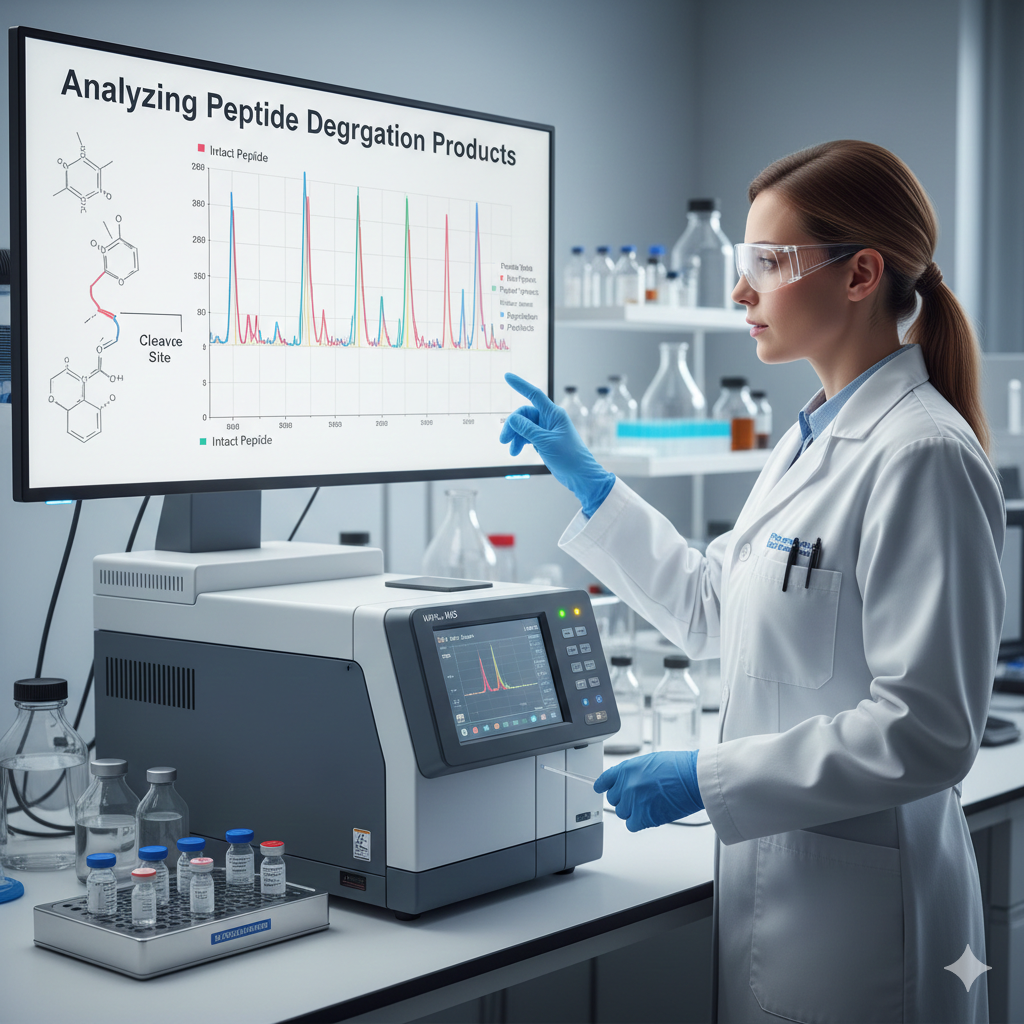
Peptide degradation products are unwanted compounds that form when peptides break down over time or under improper conditions. These byproducts emerge through various chemical processes including oxidation, hydrolysis, and deamidation. Understanding what makes peptides go bad helps researchers identify when their samples have compromised quality. When researchers receive peptide test results, these degradation markers often appear as additional peaks in chromatography reports, indicating the peptide has lost some of its original integrity.
Impact on Research Integrity
Understanding these breakdown compounds helps determine whether your research material maintains the quality standards necessary for accurate experimental work. The formation of degradation products directly impacts research outcomes because they alter the effective concentration of your active peptide. Even peptides that appear visually acceptable may contain significant degradation byproducts that compromise experimental validity. This is why peptide quality verification through professional testing becomes essential rather than optional.
Why Peptide Purity Matters for Research
Foundation of Reproducible Results
Peptide purity serves as the foundation for reproducible research results and reliable data collection. When degradation products contaminate your samples, they introduce variables that skew experimental outcomes and create inconsistencies across study replications. Understanding what does peptide purity percentage mean helps researchers evaluate whether their materials meet experimental requirements. High purity peptides ensure that observed effects stem from the intended compound rather than unknown contaminants or breakdown products.
Meeting Research Standards
Research facilities and independent scientists alike need verification that their peptides meet minimum purity thresholds, typically ranging from 95% to 99% depending on application requirements. Lower purity levels mean higher concentrations of degradation products and other impurities that interfere with receptor binding, cellular uptake, and downstream signaling pathways. Professional peptide testing companies like Optima Labs provide the analytical verification needed to confirm your research materials meet these critical standards through third party peptide testing protocols.
How to Test Peptides for Quality Assurance
HPLC and Mass Spectrometry Methods
Testing peptides requires specialized analytical equipment and expertise to identify both the target compound and any degradation products present. The gold standard method involves High Performance Liquid Chromatography (HPLC), which separates peptide components based on their chemical properties and provides detailed information about sample composition. Learning how to read peptide test results empowers researchers to make informed quality decisions. This technique reveals not just the main peptide peak but also smaller peaks representing degradation products and manufacturing impurities.
Comprehensive Testing Approach and Costs
Mass spectrometry complements HPLC analysis by confirming the molecular weight of detected compounds, helping distinguish between the desired peptide and its degradation products. Together, these methods create a comprehensive picture of peptide quality. While peptide testing cost varies depending on the analysis depth required, the investment protects against wasted research time and compromised data. Researchers should seek testing services that provide both HPLC and mass spec data for complete quality assurance through established peptide testing services.
Common Signs Your Peptides May Be Degrading
Physical Indicators of Breakdown
Degradation often begins silently at the molecular level before producing visible changes, making laboratory testing the most reliable detection method. However, recognizing signs of peptide contamination and degradation helps identify problems early. Discoloration represents one common indicator, with many researchers asking why are my peptides turning yellow or brown as oxidation progresses. Changes in texture, such as clumping or cake formation in lyophilized powders, also signal potential quality issues that warrant immediate testing.
Why Testing Remains Essential
Peptides that have absorbed moisture may show these visual changes more readily because water accelerates many degradation pathways. An unusual odor, particularly acidic or chemical smells, can indicate breakdown of amino acid residues. While these signs warrant concern, the absence of visible changes does not guarantee peptide integrity. Many degradation products form without producing observable differences, which is precisely why analytical testing becomes indispensable for quality verification and why you cannot rely on visual inspection alone to spot fake peptides.
What to Look for in Peptides During Visual Inspection
Appearance and Texture Assessment
Visual inspection provides a preliminary quality check before committing samples to research applications or sending them for laboratory analysis. Fresh, properly stored peptides typically appear as white to off-white powder with a uniform, fluffy texture when lyophilized. The powder should move freely within its container without significant clumping or adherence to walls. Any yellowing, browning, or grey discoloration suggests oxidative damage or other degradation pathways have begun, which is a critical warning sign researchers must not ignore.
Container and Seal Integrity
Examine the container itself for signs of moisture intrusion, including condensation on interior surfaces or a crystalline appearance that differs from the original powder texture. Peptide vials should maintain their vacuum seal if originally sealed under vacuum. Loss of vacuum, indicated by easy removal of rubber stoppers or absence of the characteristic hiss when opening, suggests air exposure that accelerates degradation. Understanding how to spot fake peptides includes checking for proper packaging, labeling consistency, and seal integrity that legitimate manufacturers maintain as standard practice.
How to Know if Peptides Are Contaminated
Types of Contamination to Consider
Contamination differs from degradation in that foreign substances enter the sample rather than forming from the peptide itself. Bacterial endotoxins represent a common contamination concern, particularly for peptides used in cell culture or in vivo applications. These contaminants may produce biological effects that researchers mistakenly attribute to the peptide being studied. Recognizing clear signs of peptide contamination includes unexpected biological responses, visible particulates, or unusual odors. Testing for endotoxin levels through LAL assays helps rule out this contamination source definitively.
Comprehensive Contamination Screening
Chemical contaminants can include residual solvents from manufacturing, heavy metals, or other peptide sequences that appeared as synthesis byproducts. Comprehensive testing protocols screen for these various contamination types simultaneously. When selecting peptide testing services near me or elsewhere, verify they include bacterial endotoxin testing and heavy metals screening alongside purity analysis. Contaminated peptides may still show high purity percentages if testing only measures the peptide content without screening for these additional contaminants that compromise research validity.
Understanding HPLC Results and Purity Percentages
Reading Chromatogram Data
HPLC chromatograms display as graphs with peaks representing different compounds detected in your sample. The largest peak should correspond to your target peptide, with its area under the curve determining the purity percentage. Learning how to read peptide test results requires understanding that smaller peaks appearing before or after the main peak represent degradation products, impurities, or related peptide sequences from synthesis. Peak integration calculates what percentage of the total sample consists of your desired peptide versus these other compounds.
Interpreting Additional Peaks
A purity reading of 98% means the target peptide comprises 98% of the sample while degradation products and impurities account for the remaining 2%. Understanding what does peptide purity percentage mean in practical terms helps researchers assess whether materials meet their specific application requirements. The number, size, and retention times of additional peaks provide insights into what types of degradation or contamination may be present. Peaks appearing at similar retention times to the main peak often represent peptides with minor sequence variations or single amino acid modifications from oxidation in peptides.
How to Check Peptide Purity Through Laboratory Analysis
Submitting Samples for Testing
Checking peptide purity requires sending samples to qualified analytical laboratories equipped with HPLC and mass spectrometry capabilities. Third party peptide testing eliminates manufacturer bias and provides objective quality assessment that researchers can trust. Reputable testing services provide detailed reports including chromatograms, mass spectra, and calculated purity percentages based on standardized analysis methods. When submitting samples, provide information about the expected peptide sequence, molecular weight, and any specific concerns about potential degradation or contamination.
Understanding the Testing Timeline and Investment
The testing process typically takes between five to ten business days depending on the laboratory's workload and the complexity of analysis requested. While researchers often inquire about peptide testing cost, the investment ranges from fifty to several hundred dollars depending on analysis depth, which proves minimal compared to the expense of failed experiments from degraded materials. Results arrive as a Certificate of Analysis documenting all findings. Laboratories like Optima Labs specialize in peptide analysis and understand the specific degradation patterns and quality concerns relevant to peptide research.
Storage Conditions That Prevent Degradation
Optimal Temperature and Container Requirements
Proper storage significantly extends peptide stability and minimizes degradation product formation. Understanding the best way to store peptides protects your research investment and ensures material longevity. Lyophilized peptides remain most stable when stored at temperatures between -20°C and -80°C in sealed containers protected from moisture and light. Freezer storage slows the chemical reactions that produce degradation products, while exclusion of moisture prevents hydrolysis reactions that break peptide bonds. Amber or opaque containers shield light-sensitive peptides from photodegradation and prevent oxidation in peptides containing sensitive amino acid residues.
Reconstitution and Aliquoting Best Practices
Once reconstituted, peptides become considerably more vulnerable to degradation and typically require use within weeks even under refrigeration. Understanding peptide reconstitution storage time helps researchers plan experiments efficiently and avoid waste. Reconstituted solutions should be prepared in appropriate buffers at correct pH levels, as extreme pH accelerates degradation. Aliquoting peptides into single-use portions prevents repeated freeze-thaw cycles, which create mechanical stress and temperature fluctuations that promote breakdown. Maintaining detailed records of storage duration and conditions helps identify when retesting becomes necessary to verify continued quality.
Reading Your Certificate of Analysis Correctly
Key Information Components
Certificates of Analysis contain critical information that researchers must interpret correctly to assess peptide quality. The document header identifies your specific sample through batch numbers or submission references that enable traceability. Purity percentage appears prominently, but this number alone provides incomplete information without examining the supporting chromatography data. Learning how to read peptide test results means reviewing the HPLC chromatogram to see how many additional peaks appear and their relative sizes compared to the main peak, which reveals the full quality picture.
Verifying Molecular Weight and Additional Tests
Mass spectrometry data confirms the molecular weight matches your expected peptide. Even small discrepancies of one or two atomic mass units may indicate modifications such as oxidation or deamidation that affect biological activity. Some certificates include additional tests like endotoxin levels, moisture content, or peptide content by weight that support comprehensive peptide quality verification. Understanding these various data points helps you make informed decisions about whether the tested peptide meets your research requirements and peptide batch testing requirements for regulatory compliance when applicable.
When Degradation Products Appear in Testing
Evaluating Acceptable Purity Levels
Degradation products appearing in test results don't automatically disqualify peptides from use, but they do require careful evaluation of whether the remaining purity suffices for your specific application. Some research contexts tolerate slightly lower purity levels while others demand the highest possible quality. When test results show degradation products reducing purity below your requirements, you face decisions about whether to use the material with appropriate statistical adjustments, whether to repurify the sample, or whether to obtain fresh peptides through verified suppliers.
Assessing Degradation Types and Research Impact
The types of degradation products detected also matter for these decisions. Minor modifications like single amino acid oxidations may have minimal impact on certain experiments, while other degradation pathways create compounds with potentially confounding biological activities. Understanding what causes oxidation in peptides helps prevent future quality issues through improved storage and handling. Consulting with peptide chemistry experts helps interpret test results and understand implications for your specific research goals. Regular testing throughout peptide storage periods catches degradation early before it progresses to levels that compromise research validity.
Final Thoughts on Peptide Quality Control
The Investment in Quality Verification
Peptide degradation products represent an inevitable challenge in peptide research that demands proactive quality control measures. Understanding how to test peptides, what to look for in peptides during initial inspection, and how to check peptide purity through professional analysis protects research integrity and experimental validity. The investment in proper testing and storage, including understanding peptide testing cost as a necessary research expense, far outweighs the costs of compromised data or failed experiments resulting from degraded materials.
Building a Foundation for Reliable Research
Researchers who prioritize peptide quality through regular testing and proper handling produce more reliable results and contribute to the overall advancement of scientific knowledge. Knowing the best way to store peptides, understanding peptide reconstitution storage time, and implementing third party peptide testing creates a comprehensive quality assurance program. As peptide therapeutics and research applications continue expanding, the importance of quality verification only increases. Establishing relationships with trusted testing laboratories and implementing rigorous quality control protocols ensures your research rests on a foundation of verified, high-quality materials that meet all peptide batch testing requirements.
Frequently Asked Questions
How long do peptides last before degrading?
Lyophilized peptides stored properly at -20°C or colder typically maintain stability for one to two years, though this varies by sequence and storage conditions. Once reconstituted, peptides generally remain stable for only two to four weeks under refrigeration, making understanding of peptide reconstitution storage time critical for research planning. Factors affecting longevity include amino acid composition, storage temperature, exposure to moisture and light, and pH of reconstitution buffer. Regular testing every six months verifies continued quality for critical research applications.
What causes peptides to degrade faster?
Temperature fluctuations, moisture exposure, light exposure, and improper pH conditions accelerate peptide degradation significantly. Repeated freeze-thaw cycles damage peptide structure through ice crystal formation and osmotic stress. Understanding what causes oxidation in peptides reveals that oxidation occurs more rapidly in peptides containing methionine or cysteine residues. Contamination with proteases or other enzymes can enzymatically cleave peptide bonds. Maintaining consistent frozen storage in sealed, desiccated containers provides optimal protection against these degradation factors.
Can you still use peptides with low purity?
Peptides with purity below 90% may still function in some research contexts, but lower purity introduces significant variables that compromise data reliability. The concentration of active peptide decreases proportionally with purity, requiring dosage adjustments that may not be straightforward. Degradation products and contaminants may have their own biological activities that confound results. For therapeutic research, cell signaling studies, or any application requiring precise dosing, purity above 95% is strongly recommended to ensure valid conclusions.
How accurate is peptide purity testing?
Professional peptide testing using HPLC and mass spectrometry provides accuracy within 1-2% when performed by experienced laboratories following standardized protocols. Third party peptide testing eliminates bias present when manufacturers test their own products, ensuring objective results. Accuracy depends on proper calibration of equipment, appropriate sample preparation, and expertise in interpreting complex chromatograms. Reputable laboratories participate in proficiency testing programs and maintain quality certifications that verify their analytical capabilities.
What is the difference between purity and peptide content?
Purity measures what percentage of the peptide material consists of the target sequence versus degradation products and related peptide impurities. Peptide content measures what percentage of the total sample weight consists of actual peptide versus non-peptide material like water, salts, or counter-ions. Understanding what does peptide purity percentage mean helps clarify that a sample might show 98% purity but only 70% peptide content, meaning 70% of the weight is peptide with 98% of that peptide being the correct sequence. Both metrics matter for accurate dosing calculations.
Why are my peptides turning yellow or brown?
Peptides turning yellow or brown typically indicates oxidative degradation, particularly in sequences containing methionine, cysteine, tryptophan, or tyrosine residues that are susceptible to oxidation. Exposure to air, light, moisture, or elevated temperatures accelerates this color change. The discoloration signals that degradation products have formed and the peptide purity has decreased. If you notice color changes, the peptide should be tested immediately to determine remaining purity and whether it remains suitable for research use.
How much does peptide testing cost?
Peptide testing cost typically ranges from $50 to $300 per sample depending on the depth of analysis required. Basic HPLC purity testing usually costs between $50-$100, while comprehensive testing including mass spectrometry, endotoxin screening, and additional quality checks may cost $200-$300. Third party peptide testing provides objective verification worth the investment, as it prevents wasted research time and resources on compromised materials. Many peptide testing services offer volume discounts for researchers testing multiple samples simultaneously.