-
Understanding Peptide Reconstitution Basics
-
Why Peptides Arrive in Lyophilized Form
-
Choosing the Right Reconstitution Solution
-
How Much Bacteriostatic Water to Add to Peptides
-
Step-by-Step Reconstitution Process
-
How to Know If Peptides Are Contaminated During Reconstitution
-
What to Look for in Peptides Before and After Mixing
-
How to Check Peptide Purity After Reconstitution
-
Common Reconstitution Mistakes That Affect Quality
-
Storage Guidelines and Aliquoting Peptides
-
How to Test Peptides for Quality Assurance
-
Signs Your Reconstituted Peptide Has Degraded
-
Final Thoughts on Peptide Reconstitution Safety
-
Frequently Asked Questions
Understanding Peptide Reconstitution Basics
What Is the Reconstitution Process?
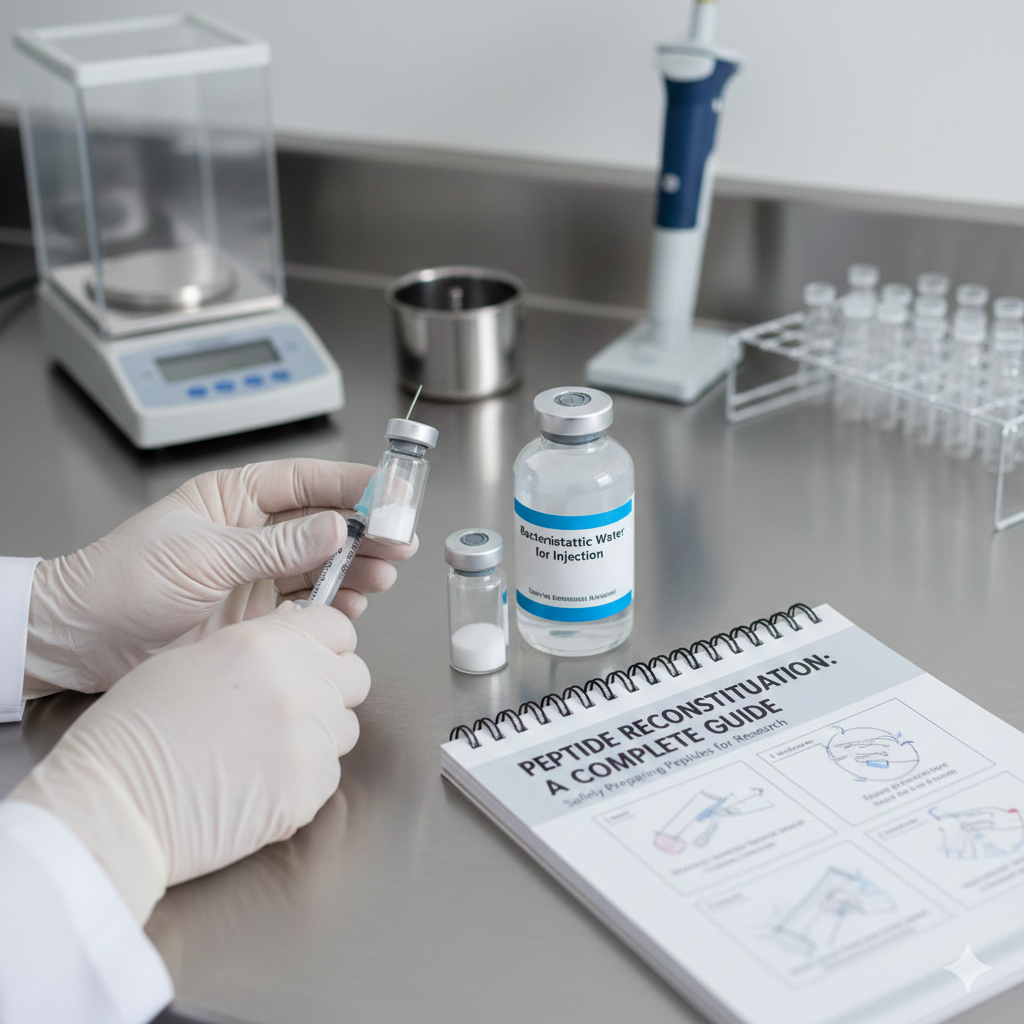
Peptide reconstitution is the process of mixing freeze-dried peptide powder with a sterile liquid to create a usable solution for research purposes. This fundamental procedure transforms stable, lyophilized peptides into their active liquid form. Researchers and laboratories perform this process regularly to prepare peptides for various applications including cell studies, analytical testing, and quality verification.
Why Proper Technique Matters
The reconstitution process requires precision and understanding of basic chemistry principles. When done correctly, it preserves the peptide's structural integrity and biological activity. However, improper technique can lead to degradation, aggregation, or contamination that compromises research results. Understanding each step ensures you maintain the peptide's intended potency and purity throughout the preparation phase.
Why Peptides Arrive in Lyophilized Form
Stability Benefits of Freeze-Drying
Manufacturers ship peptides as freeze-dried powder because this form offers superior stability during transport and storage. Lyophilization removes water content that would otherwise facilitate chemical degradation and bacterial growth. This preservation method extends the peptide vial shelf life significantly compared to liquid formulations, often allowing peptides to remain stable for months or years when stored properly at appropriate temperatures.
Practical Advantages for Shipping and Storage
The lyophilization process also reduces shipping weight and volume, making distribution more efficient and cost-effective. Additionally, freeze-dried peptides withstand temperature fluctuations better than liquid forms during transit. This stability means researchers receive products with consistent quality regardless of shipping duration or conditions. The powder form also allows for precise peptide dosing calculation before reconstitution.
Choosing the Right Reconstitution Solution
Bacteriostatic Water vs Sterile Water
Selecting an appropriate reconstitution solution directly impacts peptide stability and usability. Bacteriostatic water remains the most common choice because it contains benzyl alcohol, which inhibits bacterial contamination in multi-dose scenarios. Sterile water serves as an alternative for single-use applications or when preservatives might interfere with research protocols. Understanding how long reconstituted peptide lasts depends significantly on your choice of reconstitution solution.
Alternative Solvents for Difficult Peptides
Some peptides require specific pH buffers or special solutions based on their chemical properties. DMSO for peptide reconstitution works effectively for highly hydrophobic peptides that resist dissolution in aqueous solutions. Acetic acid peptide reconstitution provides another option for peptides with basic amino acid residues that need acidic conditions for optimal solubility. Using the wrong solution can cause precipitation, peptide aggregation after reconstitution, or reduced biological activity that undermines your research objectives.
How Much Bacteriostatic Water to Add to Peptides
Using a Peptide Reconstitution Calculator
Determining the correct volume requires understanding the relationship between peptide mass and desired concentration. A peptide reconstitution calculator simplifies this process by accounting for peptide weight, purity percentage, and target concentration. For example, if you have five milligrams of peptide at ninety-eight percent purity and want a two milligram per milliliter solution, you would add approximately 2.45 milliliters of bacteriostatic water.
How to Calculate Peptide Dosage Accurately
The peptide dosage calculation formula divides actual peptide content by desired concentration to determine reconstitution volume. Always reference your certificate of analysis for exact purity percentages, as this dramatically affects final calculations. Many researchers create a peptide reconstitution chart for commonly used concentrations, allowing quick reference without repeated calculations. Account for dead volume in syringes and vials when working with expensive or limited-quantity peptides.
Step-by-Step Reconstitution Process
Preparing Your Workspace and Materials
Begin by allowing your lyophilized peptide vial to reach room temperature naturally, which prevents condensation that could introduce contaminants. Gather sterile syringes, needles, alcohol swabs, and your chosen reconstitution solution. Calculate the required volume based on desired concentration, ensuring you understand the relationship between peptide mass and final molarity before proceeding with reconstitution.
Proper Injection and Mixing Technique
Clean the rubber stopper with an alcohol swab and allow it to dry completely. Draw your calculated volume of reconstitution solution into a sterile syringe. Inject the liquid slowly down the vial's side rather than directly onto the powder to minimize foaming and shearing forces that can damage peptide structure. Gently swirl the vial in circular motions until the powder dissolves completely, avoiding aggressive shaking that causes peptide aggregation after reconstitution.
How to Remove Air Bubbles from Peptide Vial
Air bubbles can interfere with accurate dosing and potentially damage sensitive peptides through oxidation. After reconstitution, gently tap the vial on a hard surface to encourage bubbles to rise to the top. Allow the solution to rest for several minutes before use, letting remaining bubbles dissipate naturally. Never shake vigorously to remove air bubbles, as this creates more foam and risks peptide denaturation through mechanical stress.
How to Know If Peptides Are Contaminated During Reconstitution
Visual Inspection Before Reconstitution
Contamination detection begins with visual inspection before and after reconstitution. Uncontaminated peptide powder appears as a white or off-white cake with uniform texture. Any discoloration, unusual odors, or visible particles before mixing suggests potential degradation or contamination. These warning signs indicate the peptide may have been exposed to moisture, heat, or bacterial growth during storage that compromised the peptide vial shelf life.
Post-Reconstitution Quality Indicators
After reconstitution, the solution should appear clear or slightly opalescent depending on the peptide type. Cloudiness, floating particles, or color changes often indicate contamination or aggregation problems. Temperature abuse during storage can also cause bacterial proliferation in reconstituted solutions. Performing peptide endotoxin testing through reputable laboratories like Optima Labs provides definitive confirmation of contamination status and ensures research safety beyond visual inspection alone.
What to Look for in Peptides Before and After Mixing
Certificate of Analysis Verification
Quality assessment begins with examining the certificate of analysis that accompanies your peptide purchase. This document should detail purity percentages, mass spectrometry data, and HPLC chromatograms. High-quality peptides typically demonstrate purity levels above ninety-five percent, though acceptable ranges vary based on research requirements and intended applications. This documentation is essential for accurate peptide dosing calculation.
Physical Characteristics to Monitor
Before reconstitution, check that the vial seal remains intact and vacuum pressure exists when first punctured. The lyophilized cake should not move freely inside the vial, indicating proper freeze-drying. After mixing, examine solution clarity and ensure complete dissolution without visible residue. Incomplete dissolution might indicate poor quality peptide synthesis or incorrect reconstitution solution choice. Document the appearance and any anomalies for quality control records.
How to Check Peptide Purity After Reconstitution
Laboratory Testing Methods
Third-party laboratory testing provides the most reliable method for verifying peptide purity post-reconstitution. High-performance liquid chromatography represents the gold standard for peptide analysis, separating compounds based on chemical properties and identifying impurities or degradation products. Mass spectrometry complements HPLC by confirming molecular weight and detecting unexpected modifications or contaminants that may affect how long reconstituted peptide lasts.
Professional Testing Services and Endotoxin Analysis
Optima Labs specializes in comprehensive peptide testing that examines purity, identity, and potential contamination through advanced analytical techniques. Peptide endotoxin testing represents a critical safety measure, detecting bacterial byproducts invisible to visual inspection that can interfere with cell-based research. Regular testing also identifies storage or handling issues before they compromise research outcomes. Establishing testing protocols ensures consistency across batches and builds confidence in experimental results.
Common Reconstitution Mistakes That Affect Quality
Aggressive Mixing and Air Bubble Problems
Vigorous shaking ranks among the most frequent errors during peptide reconstitution. This aggressive mixing introduces excessive air bubbles and creates shearing forces that can break peptide bonds or cause aggregation. The resulting foam may denature sensitive peptides and reduce overall potency. Always use gentle swirling motions and allow adequate time for complete dissolution rather than forcing the process through aggressive agitation.
Mixing Multiple Peptides Incorrectly
Many researchers ask whether they can mix peptides in the same syringe for convenience. While this practice works for some combinations, it risks chemical interactions, pH incompatibilities, or precipitation when peptides have different solubility requirements. Each peptide should be reconstituted separately in its optimal solution, then combined only after verifying compatibility through small-scale testing. This approach prevents costly waste from entire batches becoming unusable.
Sterility and Calculation Errors
Another critical mistake involves using non-sterile equipment or working in unclean environments. Contamination introduced during reconstitution can proliferate rapidly in the nutrient-rich peptide solution. Additionally, many researchers fail to account for peptide loss that adheres to vial walls and syringe surfaces. This loss becomes significant with expensive or limited-quantity peptides. Using proper technique and accounting for these losses ensures accurate dosing.
Storage Guidelines and Aliquoting Peptides
Short-Term Refrigeration Requirements
Reconstituted peptides require immediate refrigeration at two to eight degrees Celsius for short-term storage. Understanding how long does reconstituted peptide last depends on the specific peptide structure, with most remaining stable for two to four weeks in bacteriostatic water. This temperature range slows degradation processes while preventing freezing that could damage peptide structure. Store vials upright in designated refrigerator sections away from the door to minimize temperature fluctuations.
Long-Term Freezing and Avoiding Freeze-Thaw Cycles
Long-term storage demands freezing at negative twenty degrees Celsius or colder. Aliquoting peptides into single-use portions immediately after reconstitution represents best practice for preserving quality. Each freeze-thaw cycle increases degradation risk through ice crystal formation and temperature stress that disrupts peptide structure. Divide reconstituted peptides into multiple small vials, freezing only portions not needed immediately. Never refreeze thawed aliquots, as repeated freeze-thaw cycles peptides experience cause cumulative damage.
Proper Labeling and Documentation
Label each aliquot with reconstitution date, concentration, storage conditions, and lot number for proper inventory management. This documentation becomes critical when tracking peptide vial shelf life and ensuring you use oldest stock first. Maintain detailed records of freeze-thaw cycles peptides undergo, as this information helps interpret unexpected experimental results potentially caused by degraded peptides.
How to Test Peptides for Quality Assurance
Identity Verification Testing
Establishing a comprehensive testing protocol ensures consistent peptide quality throughout your research program. Initial testing should verify identity through mass spectrometry, confirming the peptide matches its expected molecular weight within acceptable tolerance ranges. This verification prevents costly mistakes from mislabeled or incorrect products that could invalidate months of research work and ensures accurate peptide dosing calculation.
Purity and Contaminant Analysis
Purity testing through HPLC reveals the percentage of target peptide versus impurities, degradation products, or synthesis byproducts. Request testing for specific contaminants relevant to your research, including heavy metals, bacterial endotoxins, or residual solvents. Peptide endotoxin testing deserves particular attention for any peptides used in cell culture or biological systems where endotoxin contamination produces false positive inflammatory responses. Optima Labs offers customized testing panels addressing specific research concerns and regulatory requirements.
Signs Your Reconstituted Peptide Has Degraded
Physical Degradation Indicators
Visual changes often provide the first indication of peptide degradation in reconstituted solutions. Solutions that develop cloudiness, precipitation, or color changes after initial reconstitution likely contain aggregated or oxidized peptides. Peptide aggregation after reconstitution typically correlates with reduced biological activity and compromised experimental results. Discard any solution showing unexpected visual changes rather than risking invalid data from degraded samples.
Chemical and Biological Warning Signs
Degradation also manifests through unexpected pH shifts or unusual odors developing during storage. Temperature abuse represents a common degradation cause, occurring when refrigeration fails or samples experience repeated warming during handling. Excessive freeze-thaw cycles peptides undergo accelerate degradation beyond normal storage timelines. Bacterial contamination produces distinct cloudiness and may generate gas pressure within sealed vials. When degradation signs appear, submit samples for analytical testing to determine whether partial or complete product loss has occurred.
Final Thoughts on Peptide Reconstitution Safety
Combining Precision with Verification
Proper peptide reconstitution combines technical precision with quality verification to ensure research success. Every step from calculating how much bacteriostatic water to add to peptides through final storage impacts peptide integrity and experimental outcomes. Researchers who invest time learning correct techniques, using a peptide reconstitution calculator for accuracy, and implementing quality testing protocols protect their valuable research investments and generate reliable, reproducible data.
Partnership with Testing Laboratories
Partnering with specialized testing laboratories provides independent verification that your reconstitution practices maintain peptide quality standards. Optima Labs supports researchers through comprehensive testing services including peptide endotoxin testing that identify potential issues before they compromise experiments. Whether you need to test peptides for purity verification, check how long reconstituted peptide lasts under your storage conditions, or screen for contamination, professional analysis delivers the confidence required for high-stakes research and development work.
Frequently Asked Questions
How long does reconstituted peptide last in the refrigerator?
Reconstituted peptides typically remain stable for two to four weeks when stored at two to eight degrees Celsius in bacteriostatic water. The exact stability duration varies based on specific peptide structure, amino acid composition, and storage conditions. Some peptides degrade more rapidly due to oxidation-prone amino acids like cysteine or methionine. Always check manufacturer recommendations for your specific peptide, and consider aliquoting peptides into single-use portions and freezing what you won't use within thirty days. Conducting periodic purity testing helps verify stability over your intended storage period.
Can you use sterile water instead of bacteriostatic water for peptide reconstitution?
Yes, sterile water works for peptide reconstitution, particularly when you plan to use the entire vial in one session. Bacteriostatic water contains benzyl alcohol preservative that inhibits bacterial growth during multiple withdrawals over several days or weeks. If using sterile water for multi-dose vials, you must maintain strict sterile technique and use the peptide within shorter timeframes. Some research protocols specifically require sterile water to avoid preservative interference with biological assays or cell cultures.
What causes peptides to not dissolve completely during reconstitution?
Incomplete peptide dissolution typically results from using an inappropriate reconstitution solution with incompatible pH levels. Highly hydrophobic peptides may require small amounts of DMSO for peptide reconstitution before adding aqueous solutions. Insufficient mixing time also contributes to visible powder remaining in solution. Some peptides naturally require extended dissolution periods of fifteen to thirty minutes with gentle swirling. Temperature affects solubility as well, with some peptides dissolving better at room temperature than when cold.
How do you calculate the right amount of water for peptide reconstitution?
Calculate reconstitution volume by dividing the peptide mass by your desired concentration. A peptide reconstitution calculator simplifies this by automatically accounting for purity percentages. For example, if you have two milligrams of peptide at ninety-five percent purity and want a one milligram per milliliter concentration, you need 1.9 milligrams of actual peptide, requiring 1.9 milliliters of solution. Always account for the purity percentage listed on your certificate of analysis for accurate peptide dosage calculation.
Should you shake or swirl peptide vials during reconstitution?
Always swirl peptide vials gently in circular motions rather than shaking them vigorously. Shaking introduces excessive air bubbles and creates mechanical stress that can damage sensitive peptide bonds or cause peptide aggregation after reconstitution. Gentle swirling promotes gradual mixing while preserving peptide structure and biological activity. If peptide doesn't dissolve with swirling alone, allow additional time rather than increasing agitation intensity. Patient, gentle technique consistently produces better results than forceful mixing methods.
Can reconstituted peptides be refrozen after thawing?
Refreezing reconstituted peptides after thawing significantly increases degradation risk and should be avoided whenever possible. Each freeze-thaw cycle causes ice crystal formation that can disrupt peptide structure and reduce potency. Instead, practice aliquoting peptides during initial reconstitution, freezing each portion separately in single-use vials. This approach eliminates the need for refreezing and maintains consistent peptide quality across all uses. Excessive freeze-thaw cycles peptides undergo dramatically reduce biological activity and experimental reliability.
How can you tell if a peptide has been contaminated with bacteria?
Bacterial contamination manifests through solution cloudiness, visible particles, unexpected color changes, or unusual odors developing after reconstitution. Contaminated solutions may also show increased pH changes or gas production creating pressure inside sealed vials. However, low-level contamination may not produce visible signs, making laboratory testing essential for definitive confirmation. Peptide endotoxin testing and sterility assays performed by facilities like Optima Labs detect bacterial presence and byproducts invisible to naked eye inspection.
Can you mix peptides in the same syringe?
Mixing peptides in the same syringe should be approached cautiously and only after verifying compatibility. Different peptides may have incompatible pH requirements, causing precipitation or aggregation when combined. Some peptide combinations undergo chemical interactions that reduce potency or create unwanted byproducts. Always reconstitute each peptide separately in its optimal solution first, then perform small-scale compatibility testing before combining larger quantities. When compatibility is confirmed, peptides can be mixed immediately before use, though storing mixed peptides long-term risks unpredictable degradation.